
VÍT BOHAL ON THE HAUNTOLOGY OF NEW BEGINNINGS: SPECTRE IN THE WEDGE BY LŐRINC BORSOS
Czech writer Vít Bohal, a researcher of xenology and occultism, visits Lőrinc Borsos’ Spectre in the Wedge at MeetFactory in Prague. The text explores the exhibition’s treatment of the car as a technological and cultural fetish, tracing its seductive, violent and occult dimensions—from Futurism and consumer desire to Eastern European fantasies of Western luxury. Through a dismantled car, Bohal argues that Lőrinc Borsos turns the fetish into an object of exorcism.
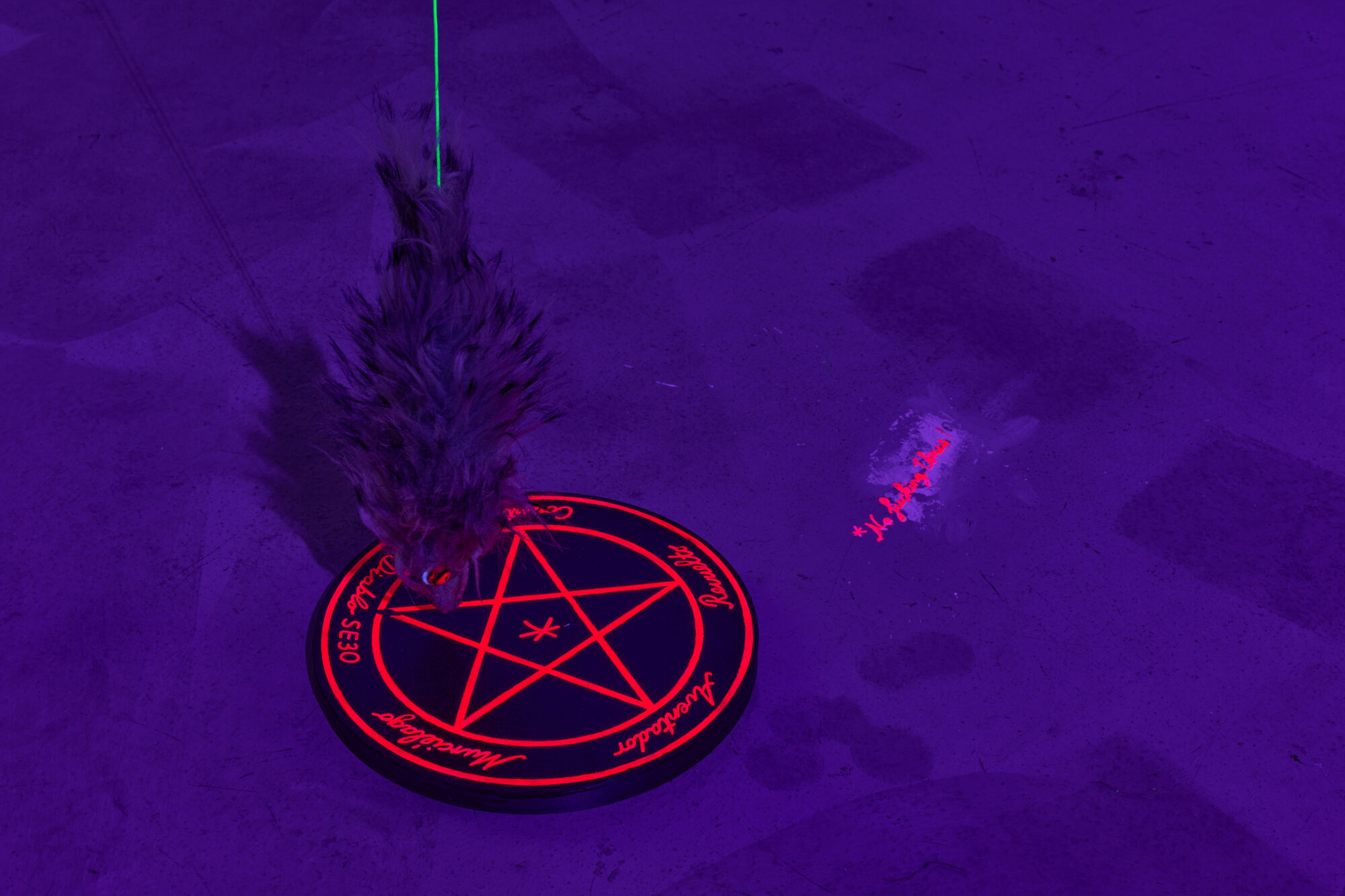
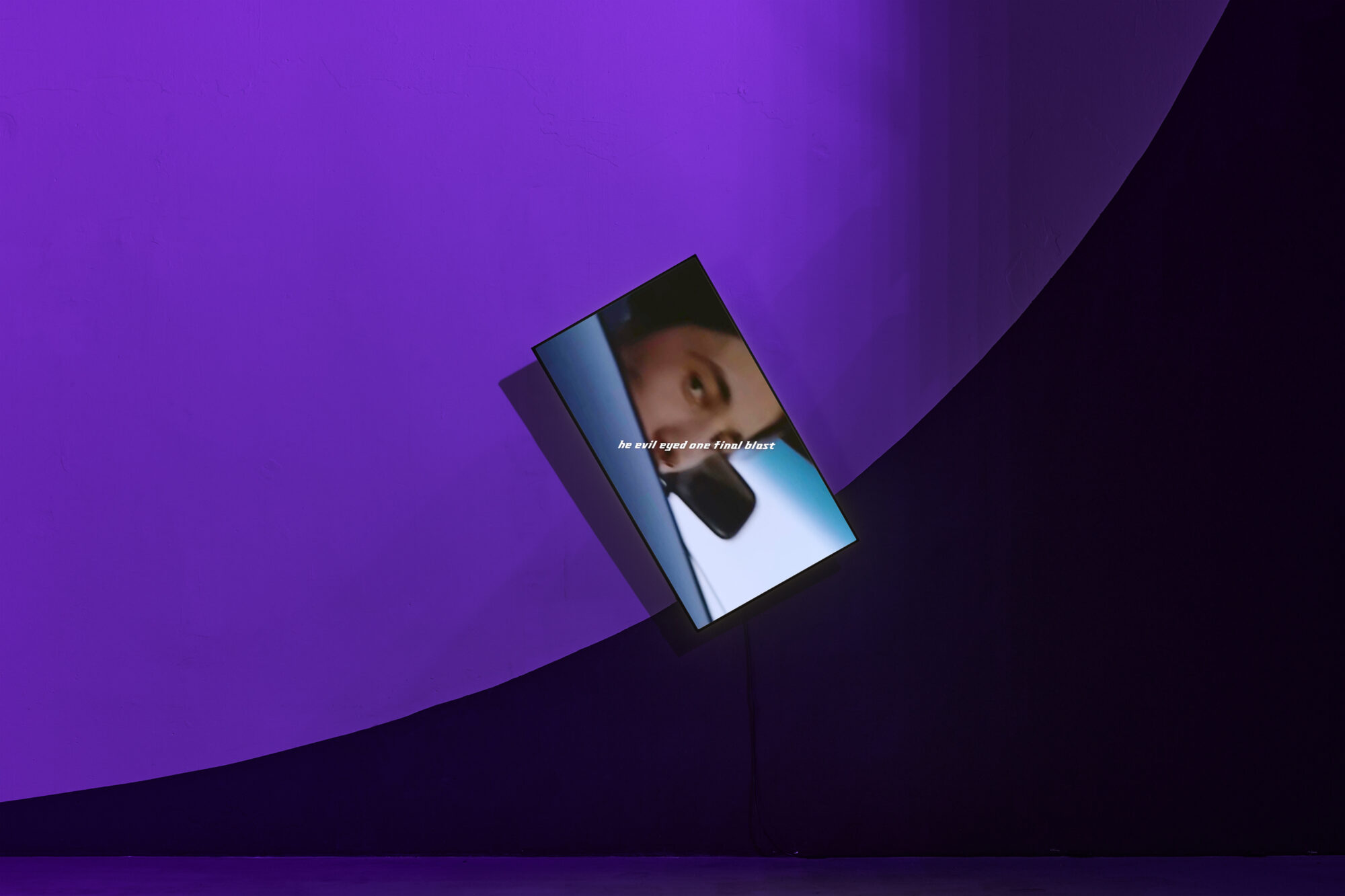
He was possessed by a spirit at age seventeen. The sleek ferocity of the metallic purple Lamborghini Diablo SE30 triggered a personal séance between the young János and the television. In a single unguarded moment, sitting before a TV screen in 1990s Székesfehérvár, he became possessed by MIKE—the demon of acceleration and prestige, seductive surfaces and luxury. The Jamiroquai music video Cosmic Girl (1996) in which a gleaming Lamborghini and friends race down open roads did its work: “And then suddenly I was sitting in Jay Kay’s seat, watching myself on the TV screen, and the video played backward, intoning ‘She’s just a cosmic girl.’ And then he just slipped into me […] He didn’t introduce himself, but I knew his name was MIKE.”
The above is an excerpt from the video that is part of the Spectre in the Wedge exhibition by the artist duo Lőrinc Borsos. The exhibition is the outcome of the broader project Deconstructing Myths that explores “new mythologies” and the ways “art and culture are used to simplify and politicize traditional symbols, often […] turning them into tools of nationalist messaging,” with special focus on the V4 region (Hungary, Slovakia, Poland, and the Czech Republic). In the modern political context, mythologies are often deliberately constructed also in part through their targeting “of fear, emotion, and false unity” which lend themselves easily to political manipulation. Four institutions participated in the program across four cities – Prague (MeetFactory, curators Tereza Havelková and Kateřina Pencová), Košice (KAiR), Budapest (aqb), and Sopot (Goyki 3 Art Incubator); in addition to the duo Lőrinc Borsos, the participating artists include Zuzana Markéta Macková, Ola Nenko and Nik Timková.
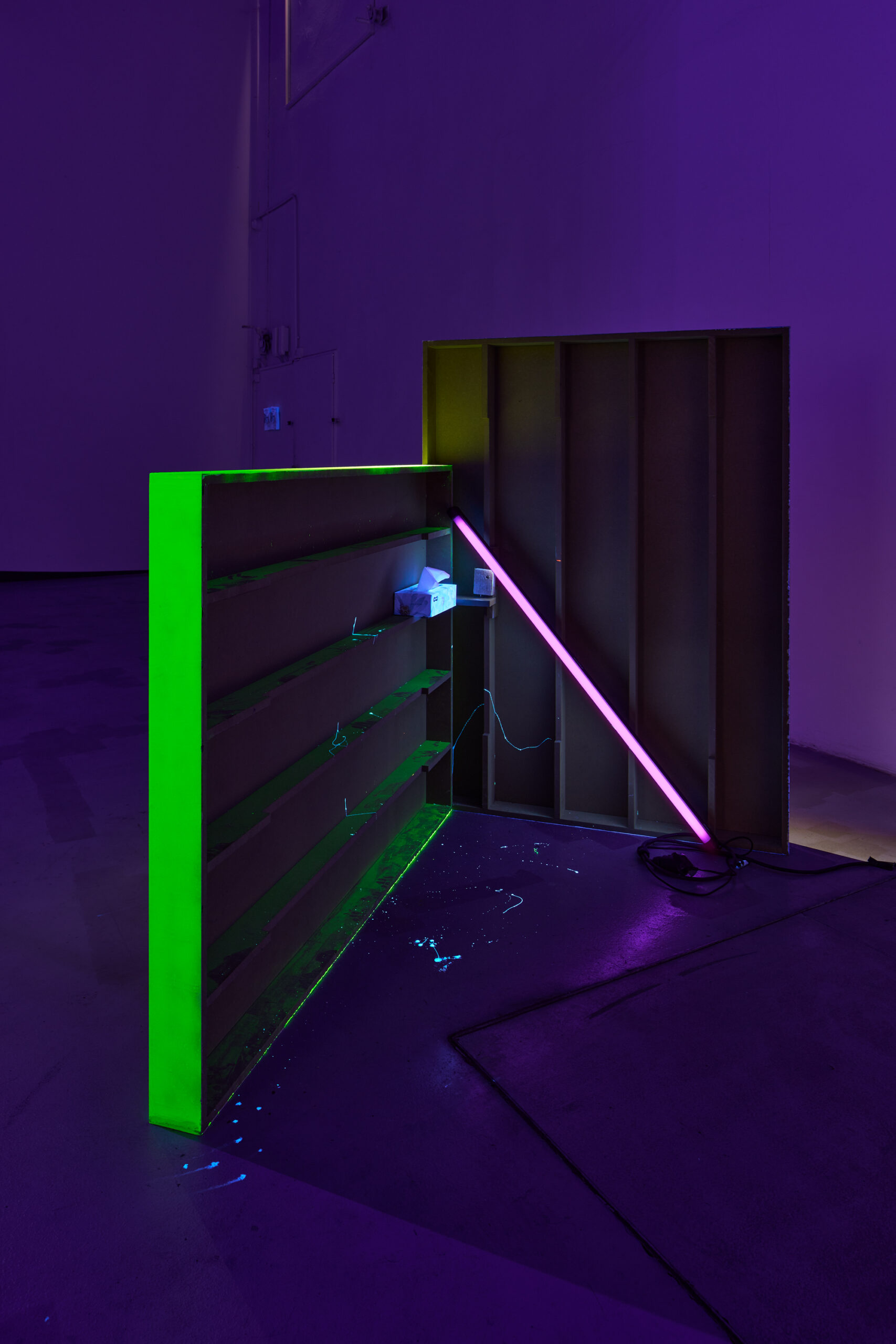
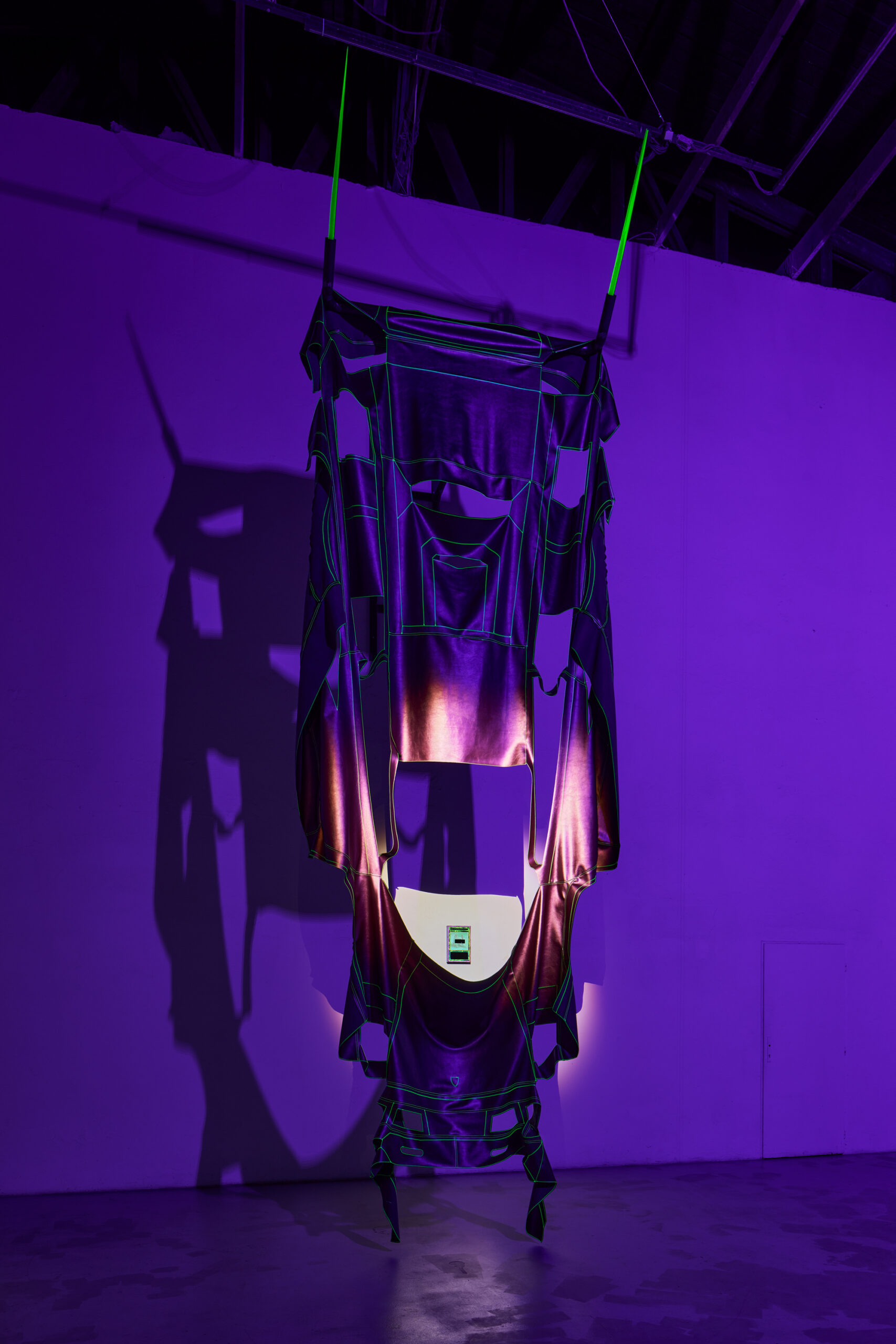
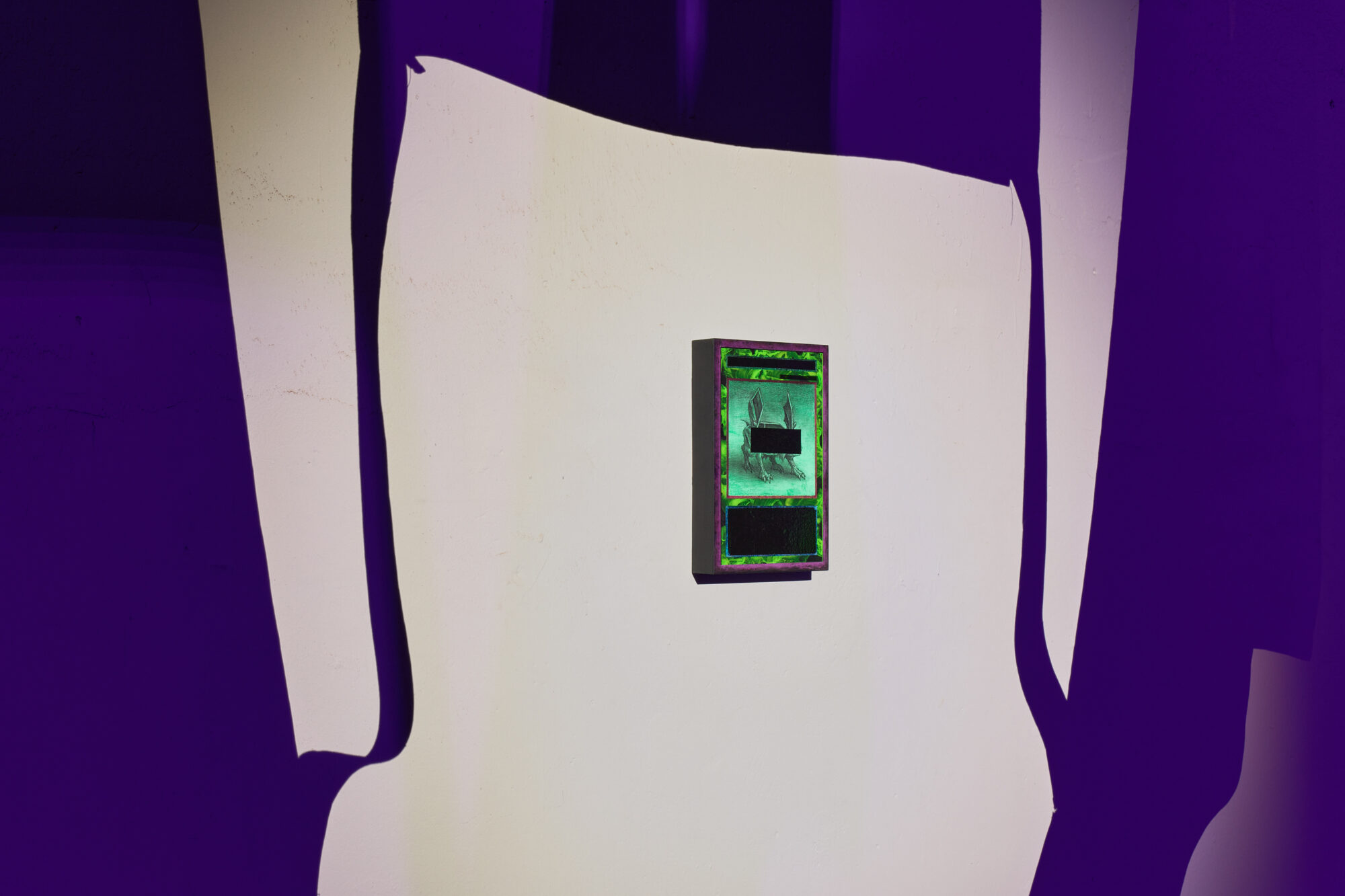
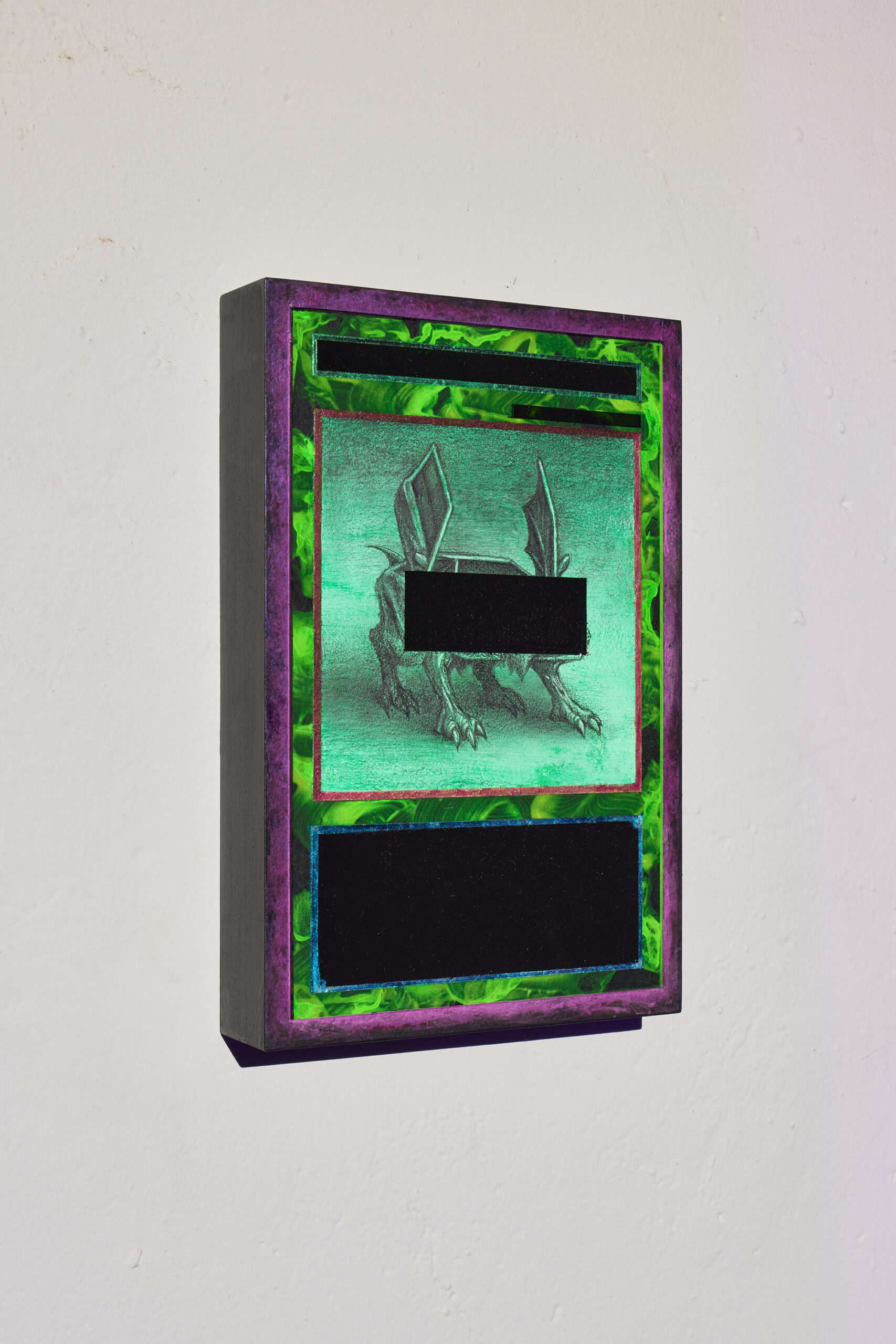
Exorcising the Demon-Car
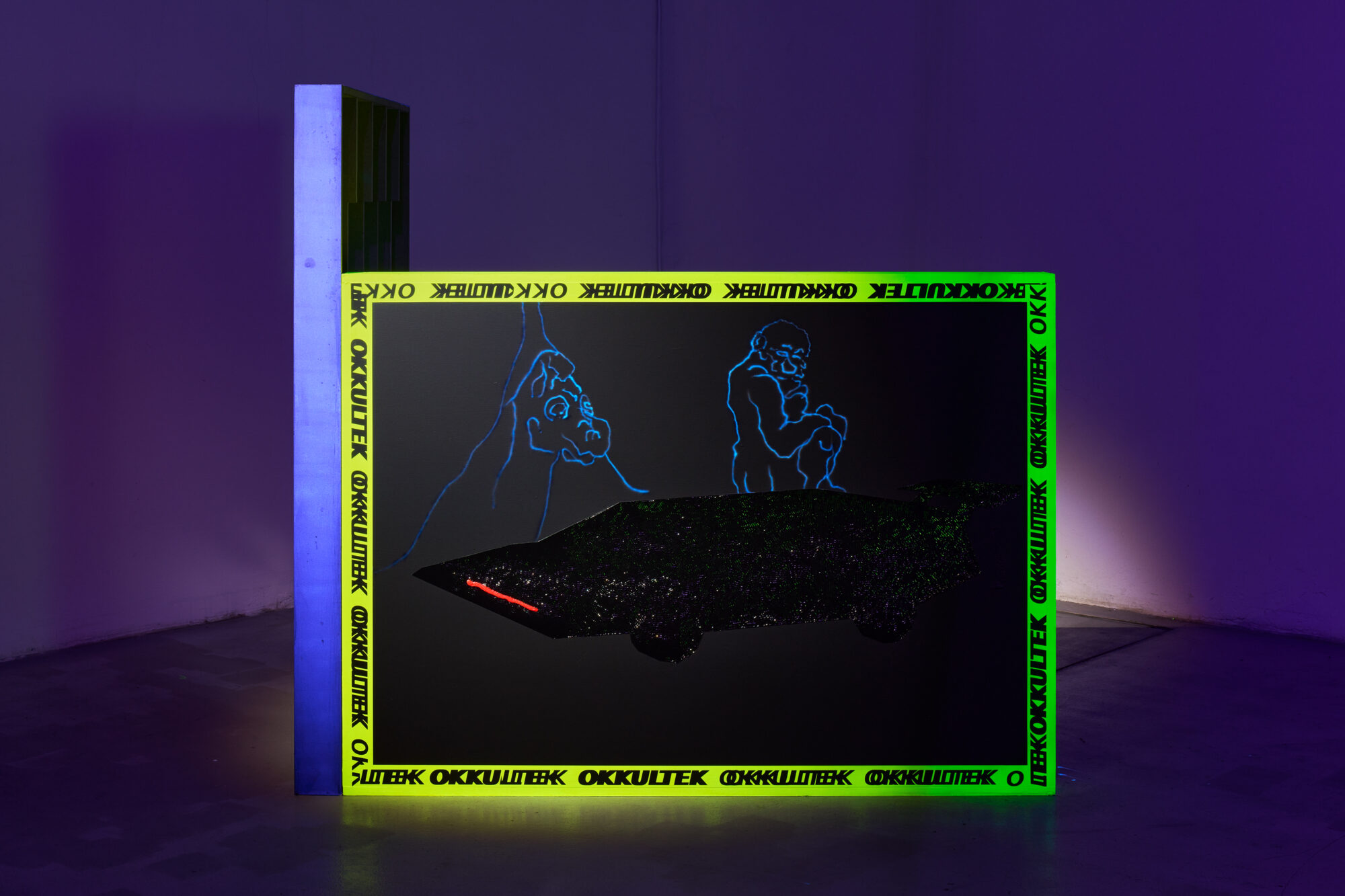
Lőrinc Borsos’s original idea aimed to explore the concept of “Okkultec”—that is, the occult dimension of technology and its impact on contemporary experience. The Lamborghini is understood as a technology that subjugates us, makes us hosts for its own purposes and manifests its full potential through us.
So what is so entrancing about cars? From Marinetti’s first Futurist drive through the Italian countryside, through Ballard’s sexualised swerving in Crash (1973), to the current farce of the car as the guarantor of a muddled “right-wing conservative” politics seen in the Motorists for Themselves party (currently sitting in Czech government), the car remains one of the fundamental, long-standing fetishes of Western modern culture.
Like any symbol, however, it remains at its core ambiguous and ambivalent—the automobile is simultaneously an accelerator of personal and social libido, an ergonomic tool that lulls us to sleep while the world around us burns (as in Tomi Faison’s work for last year’s exhibition Bottom’s Just Another Floor, MeetFactory), as well as a magical mirror meant to reflect the owner’s life path, degree of success or personal philosophy… The seductive curves of sports cars and the rugged bodies of pickup trucks have been racing through the diesel-greased corners of our subconscious for decades, intoxicating us like the scent of fresh gasoline. And the marketing experts of car companies know very well how to bend these demons to their will.
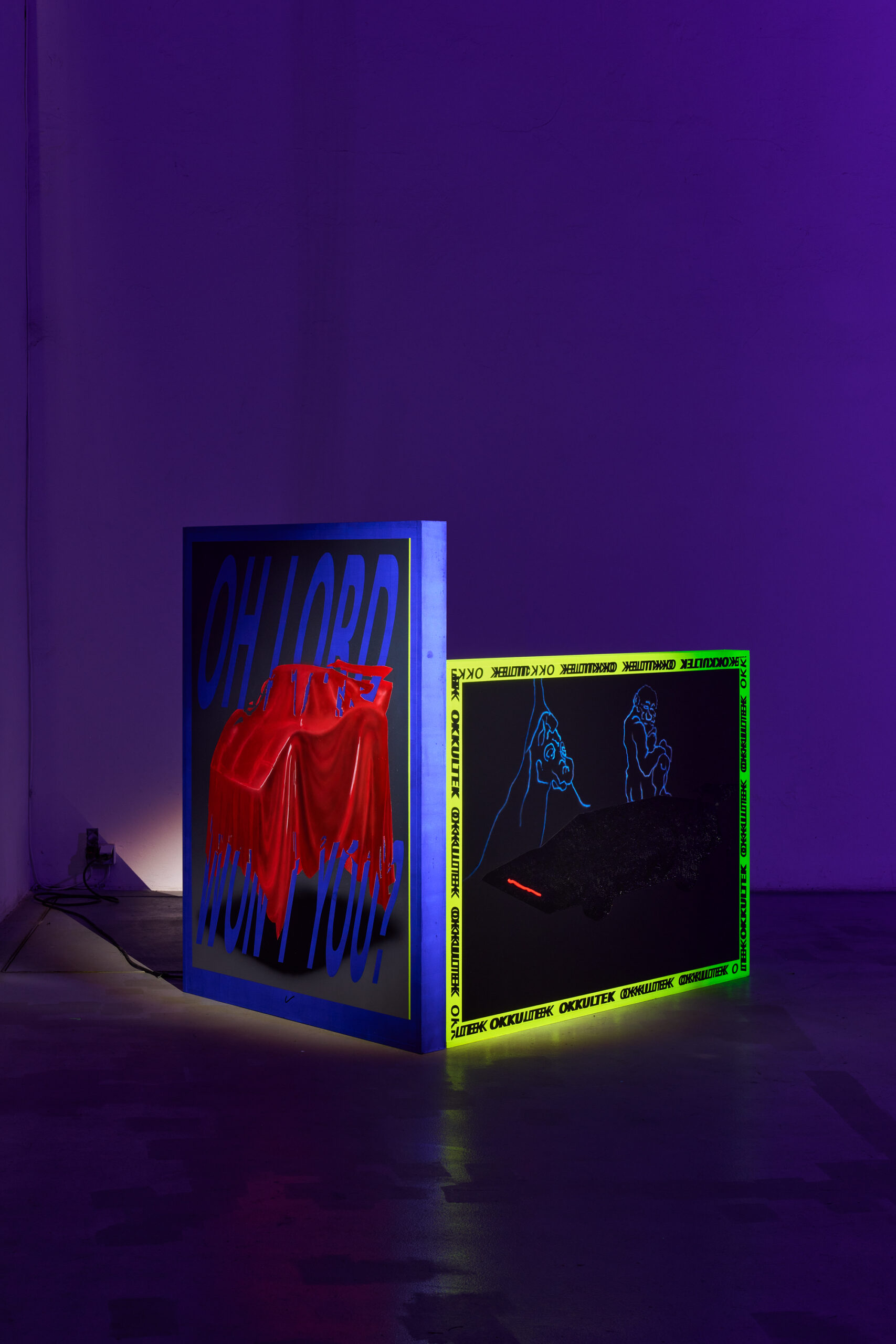
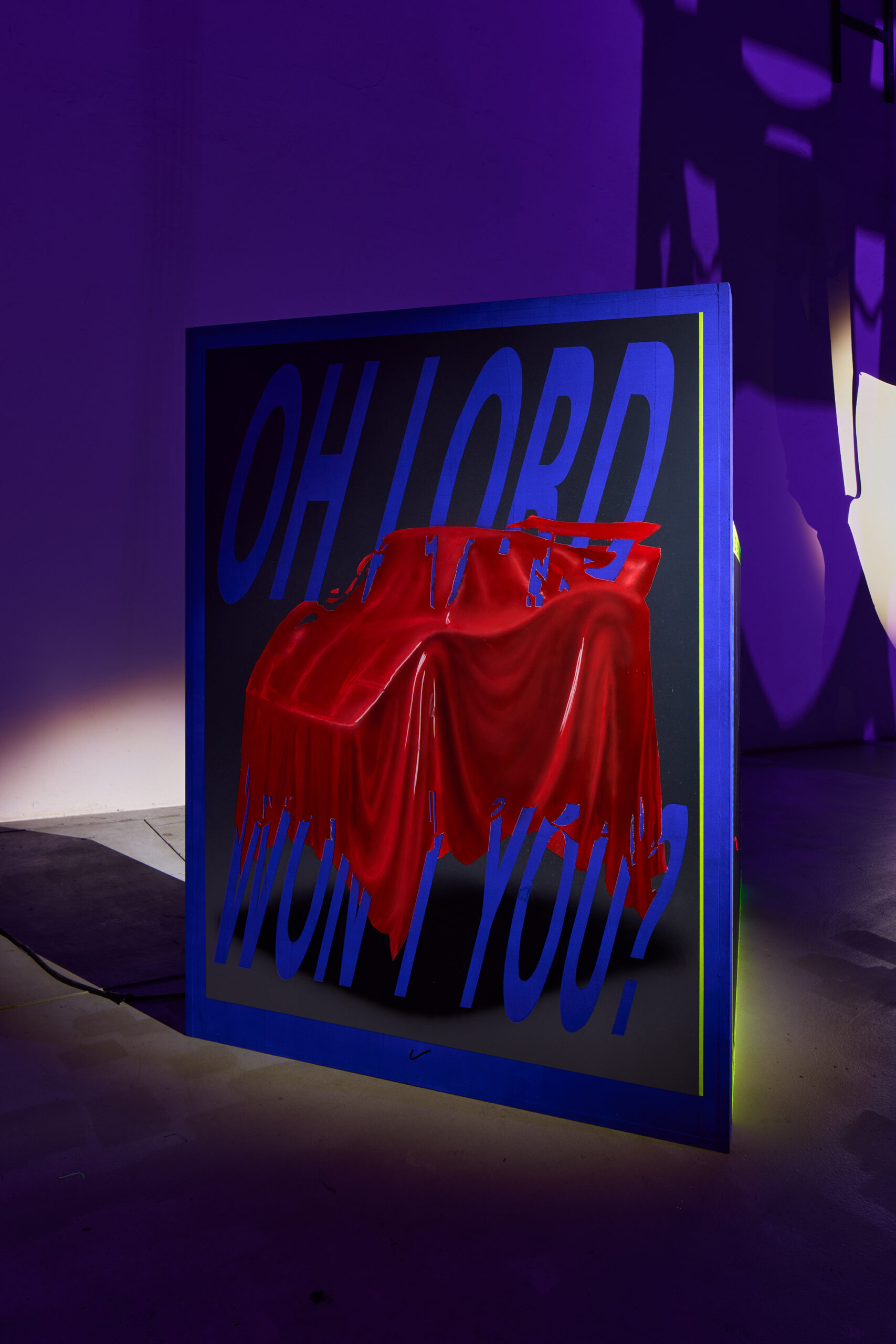
For Spectre in the Wedge, Lőrinc Borsos drew specific inspiration from the well-known film Ferat Vampire (1982), where Jan Švankmajer’s captivating effects approach a body horror in the style of John Carpenter and where the polished brand of the mysterious Ferat company conceals a vampire car that literally sucks the blood from its female drivers. And the exhibition purposefully plays with a similar obsession with the fusion of a living, breathing body with the rhythm of a twelve-cylinder engine.
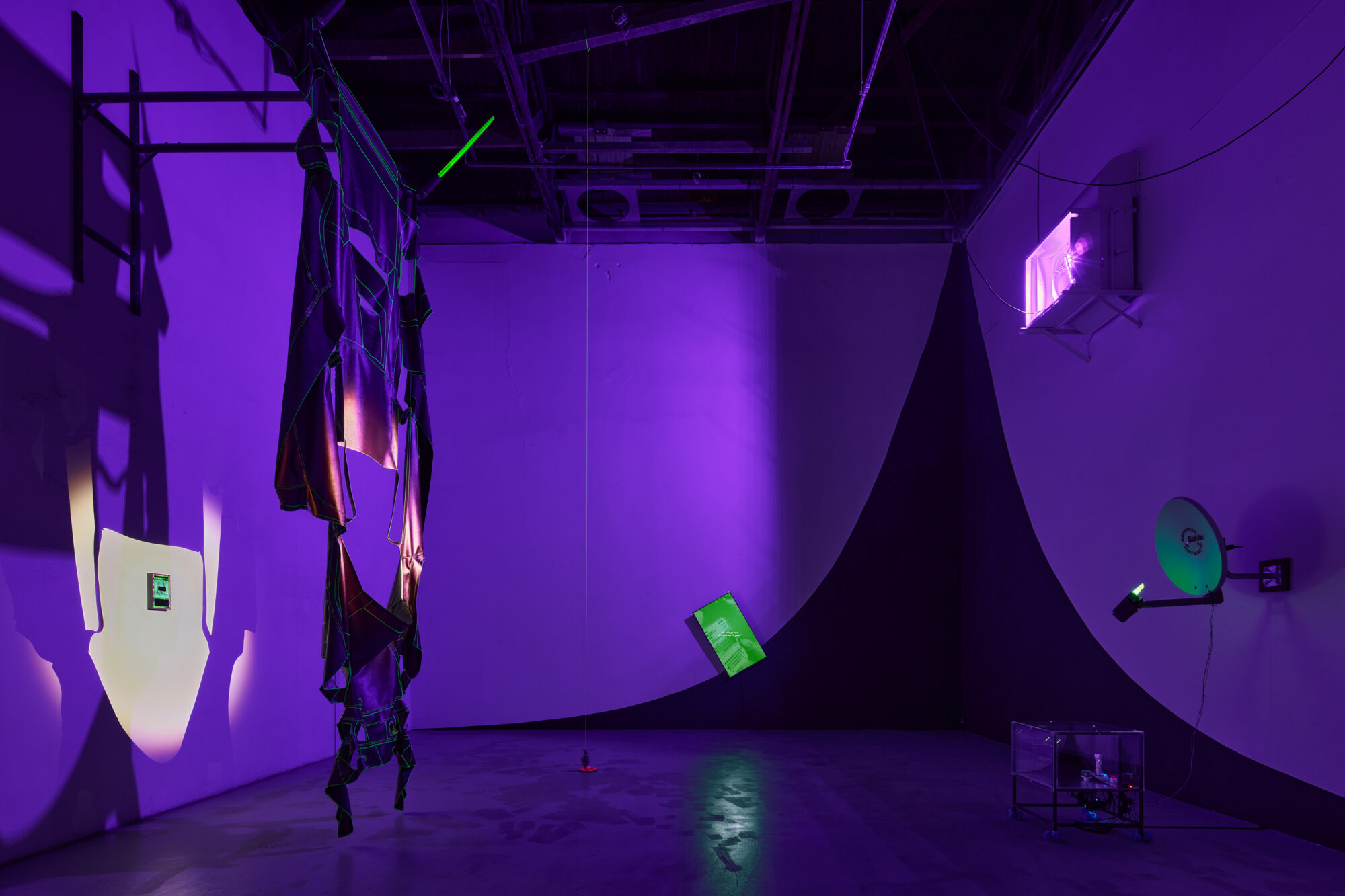
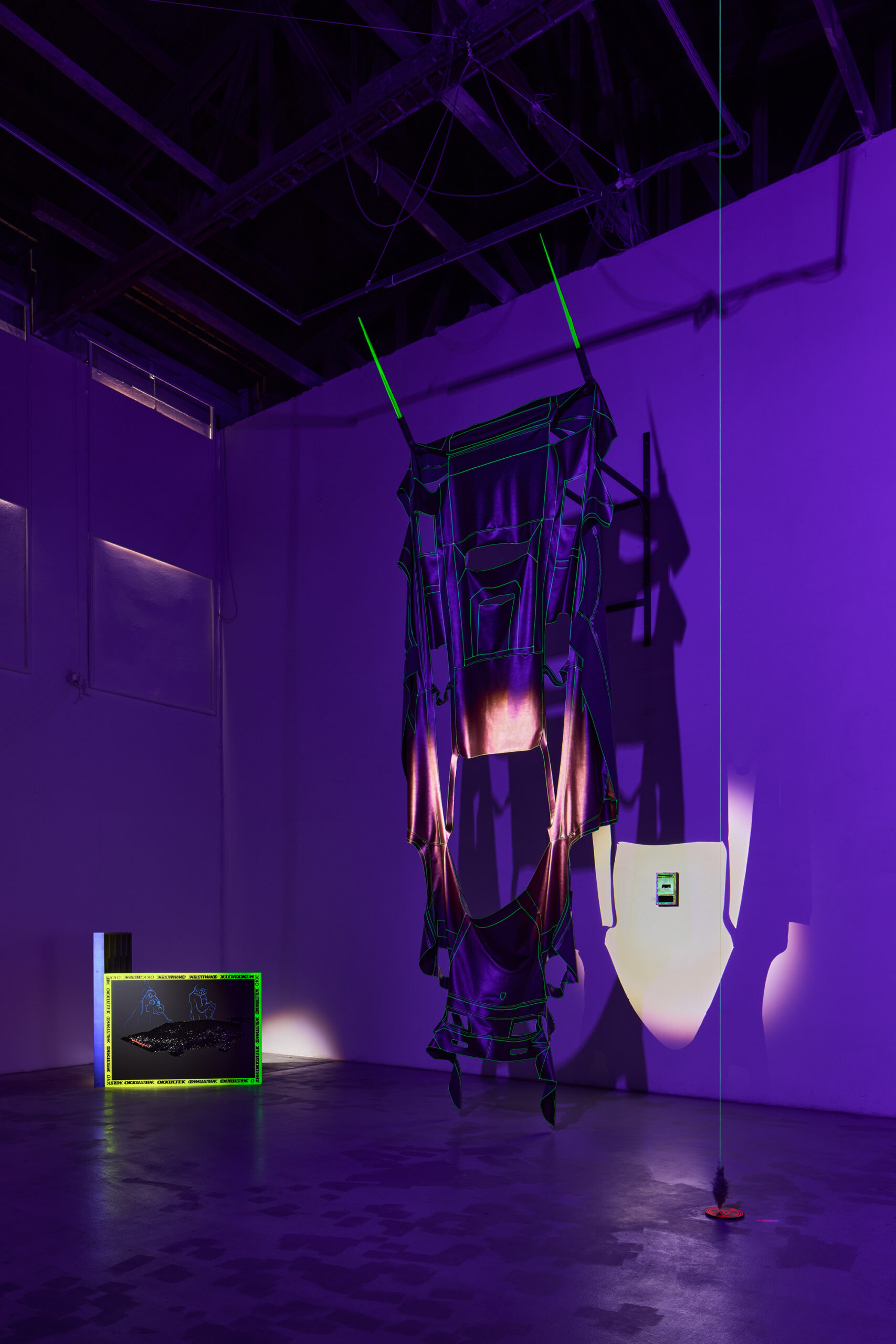
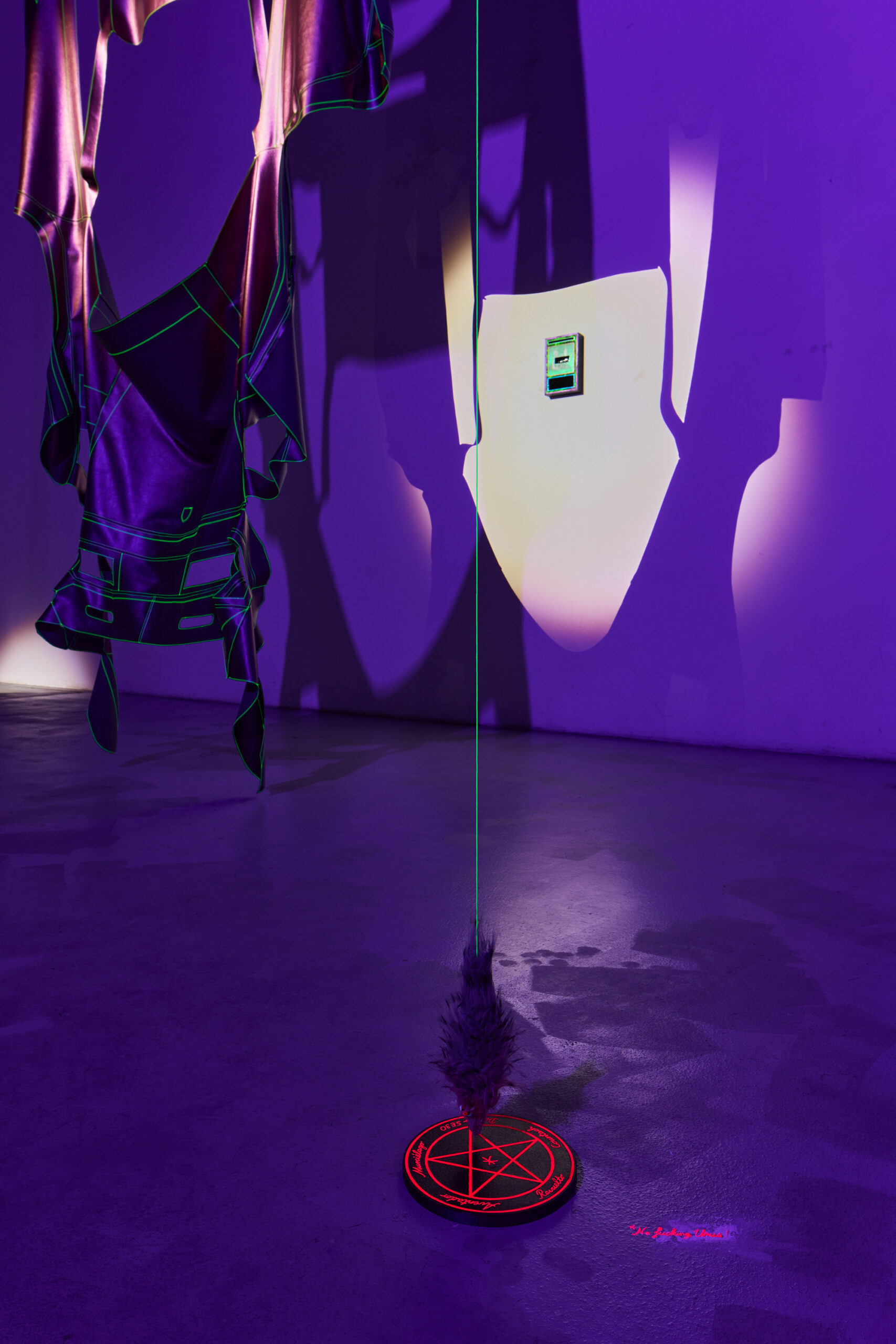
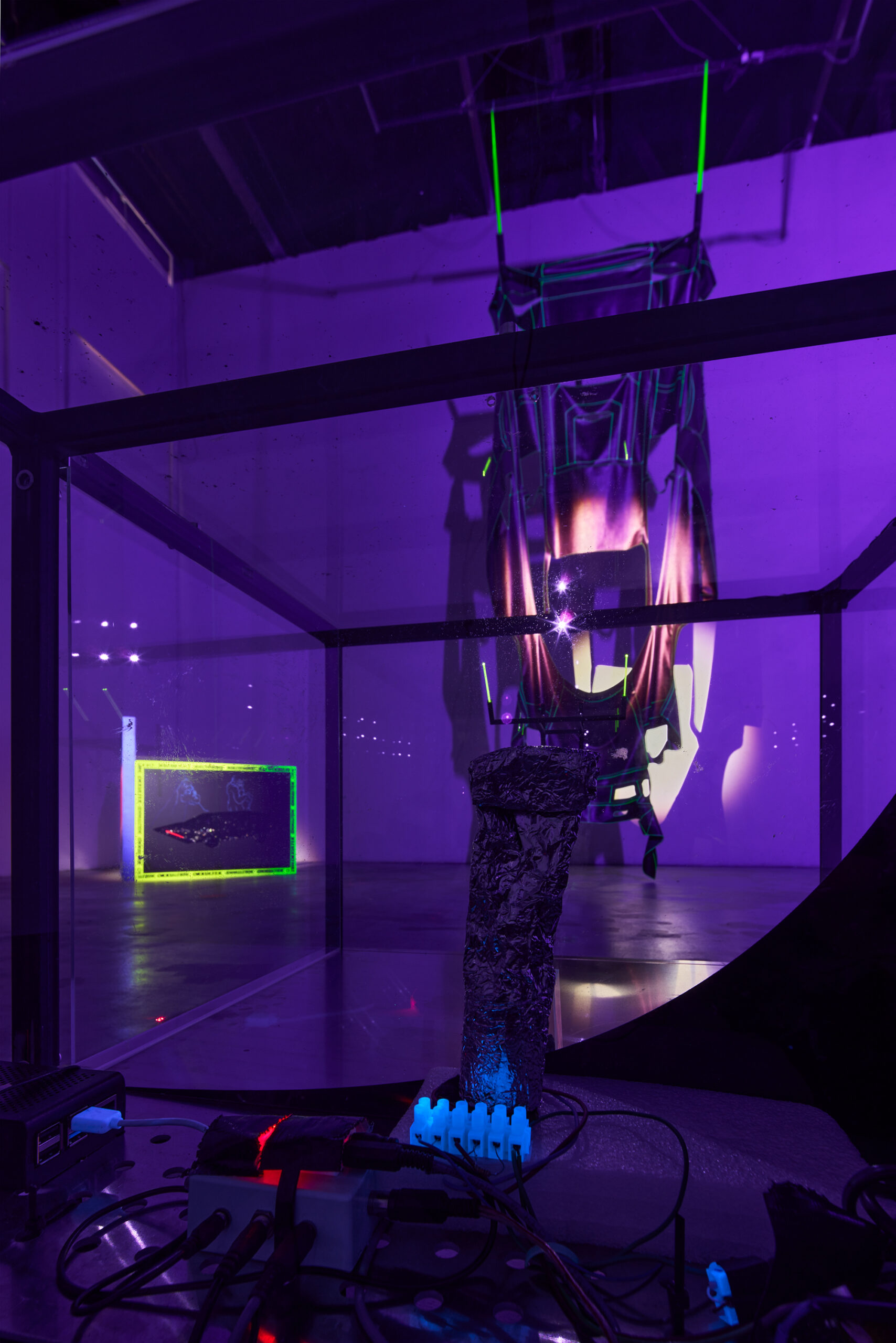
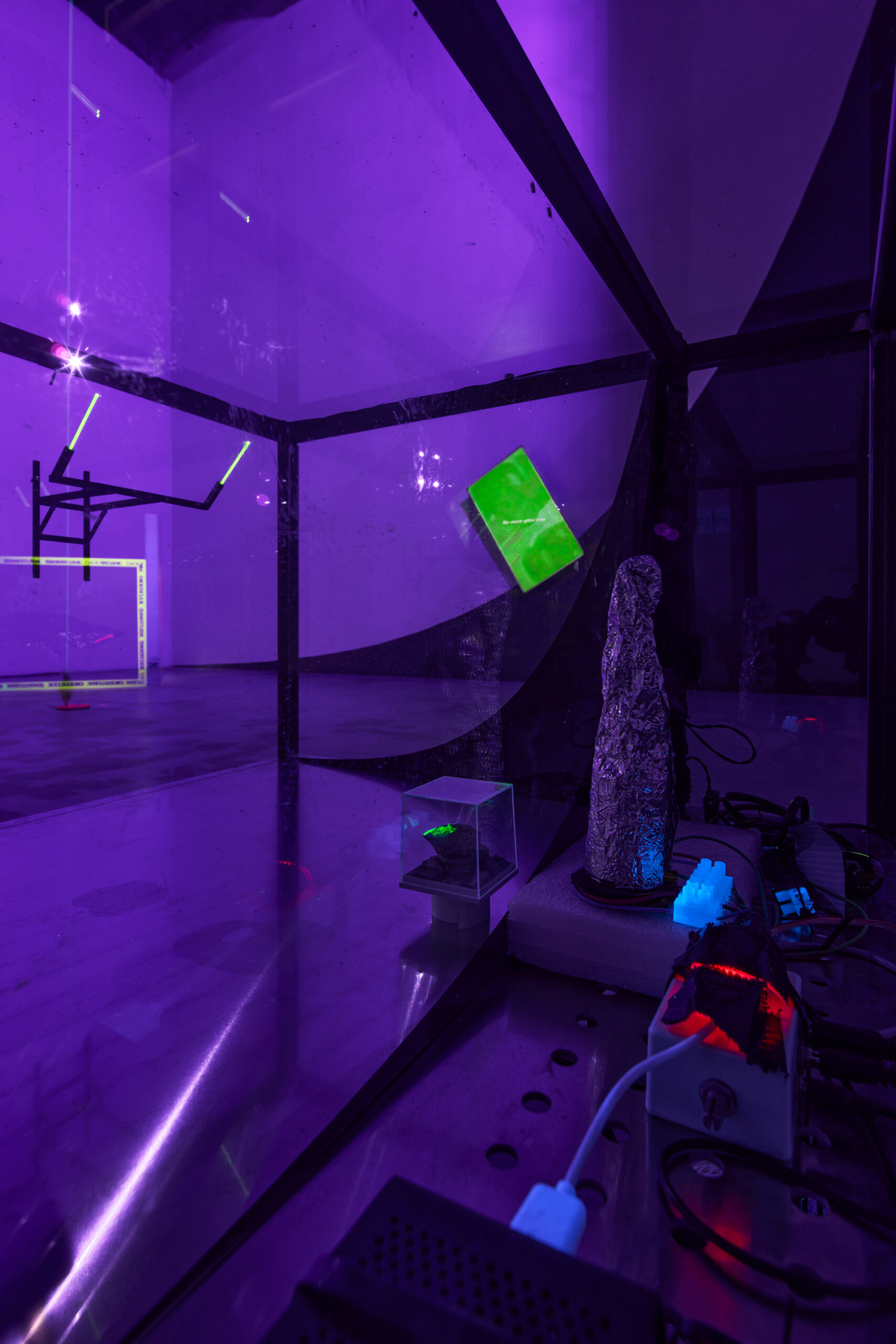
But Lőrinc Borsos’ method is also strongly rooted in self-analysis. It provides space for self-therapy and we become participants in the séance, offering us a glimpse into this exorcism of ghosts and skeletons in the closet. The exhibition is in this sense about overcoming the fixation on Lamborghini as a fetish, about emptying it of meaning and literally “skinning” it, as suggested by the object of the dismantled car that dominates the entire exhibition space like a dead sacrifice or trophy.
The Hauntology of New Beginnings
Spectre in the Wedge in a certain sense addresses the feelings of alienation and inferiority brought about by the entry of the Western consumer paradise into the “economy of scarcity” of 1990s Eastern Europe. The Lamborghini communicates the obsession with a diabolical object that simultaneously gives and takes—just hand the company a wad of cash and the monster can be yours. But rather than accepting this Faustian bargain and its lock-in, the exhibition accelerates its symbolism beyond the boundaries of contemporary consumerism and its marketing strategies. Lőrinc Borsos appropriates the symbolism of the luxury product in order to process it in their own way through clandestine, occult methods, and to ultimately leave it behind, exhausted and deflated. The exhibition thus traces a line of flight that transcends Lamborghini as an icon of speed, luxury, and prestige—but to what end?
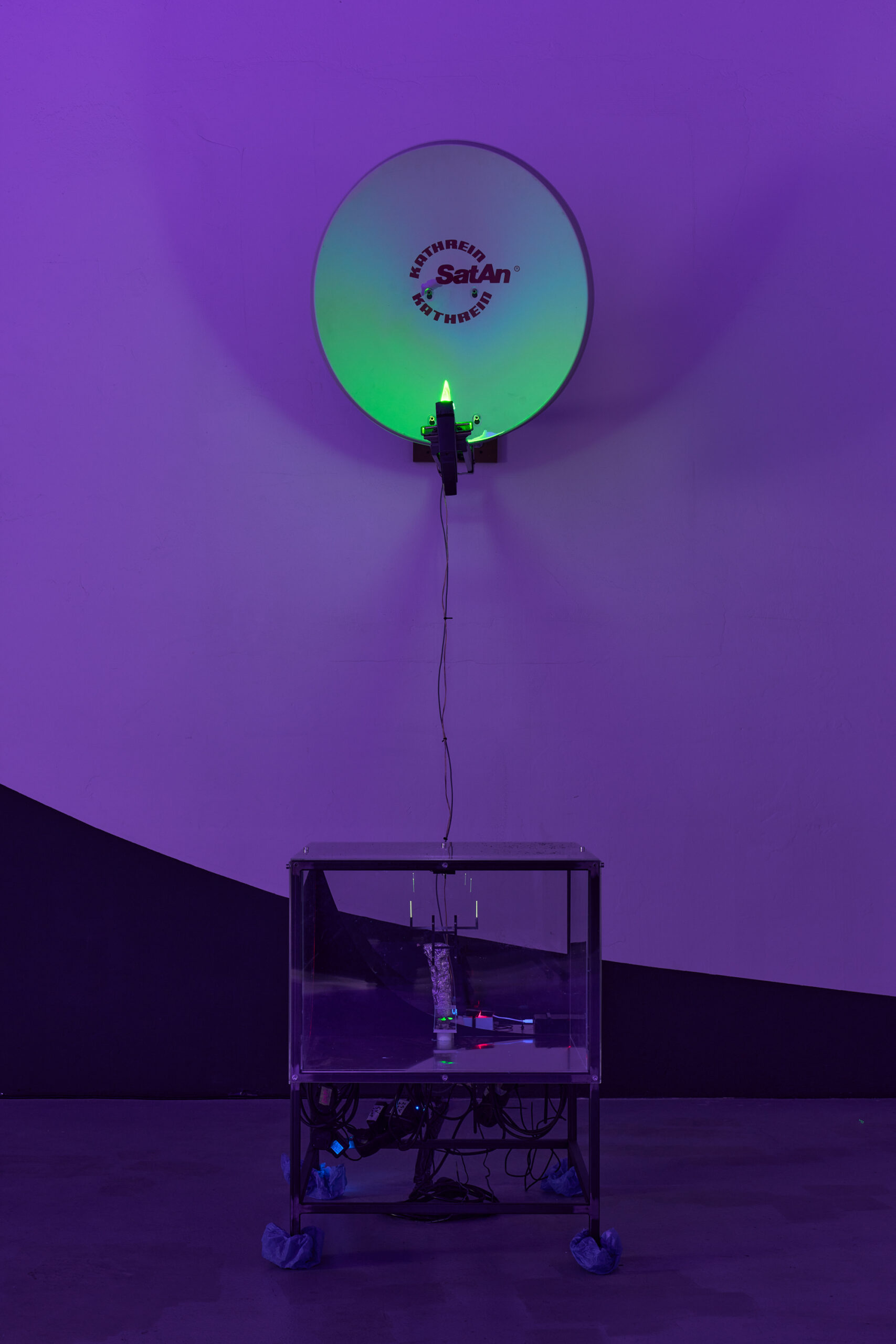
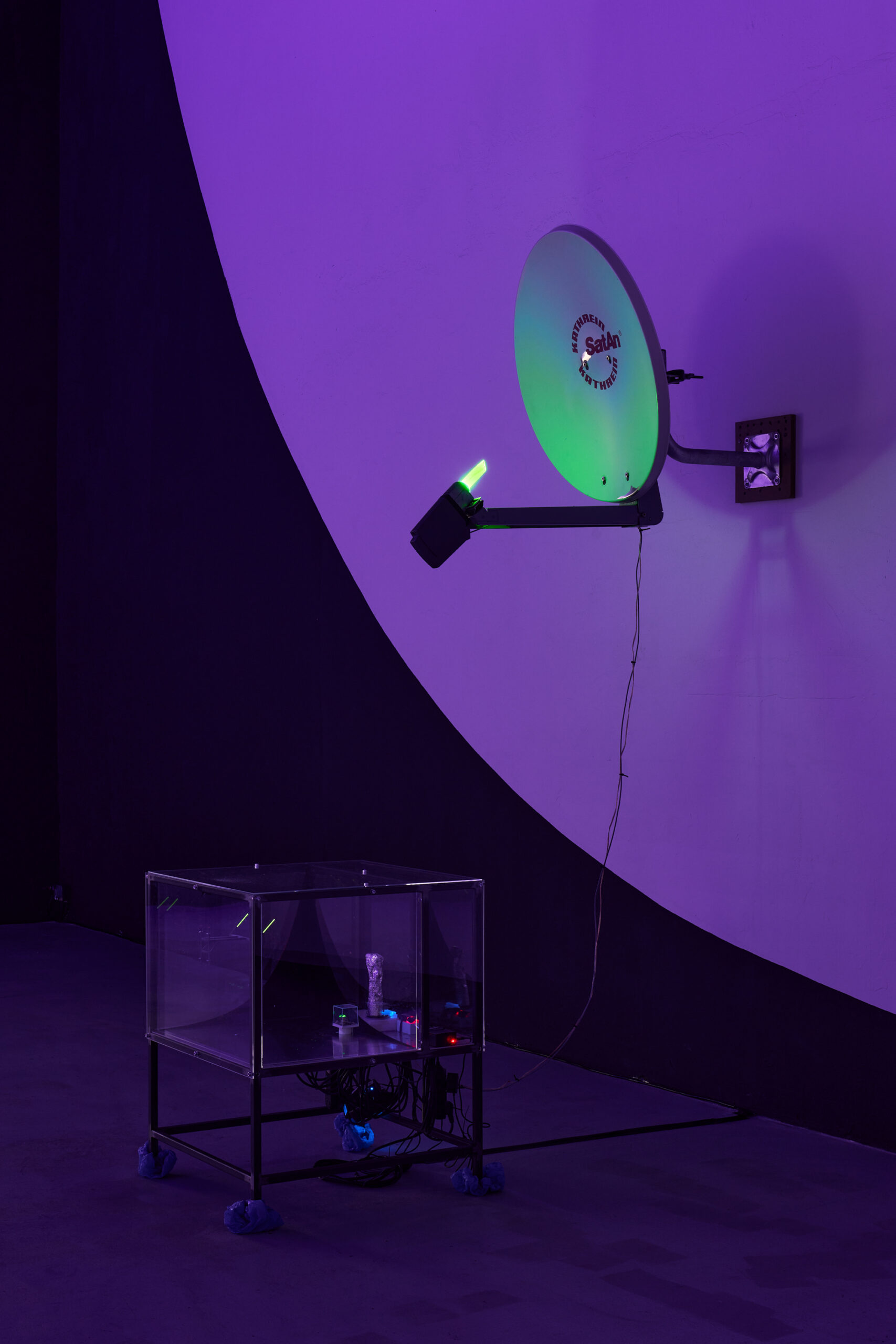
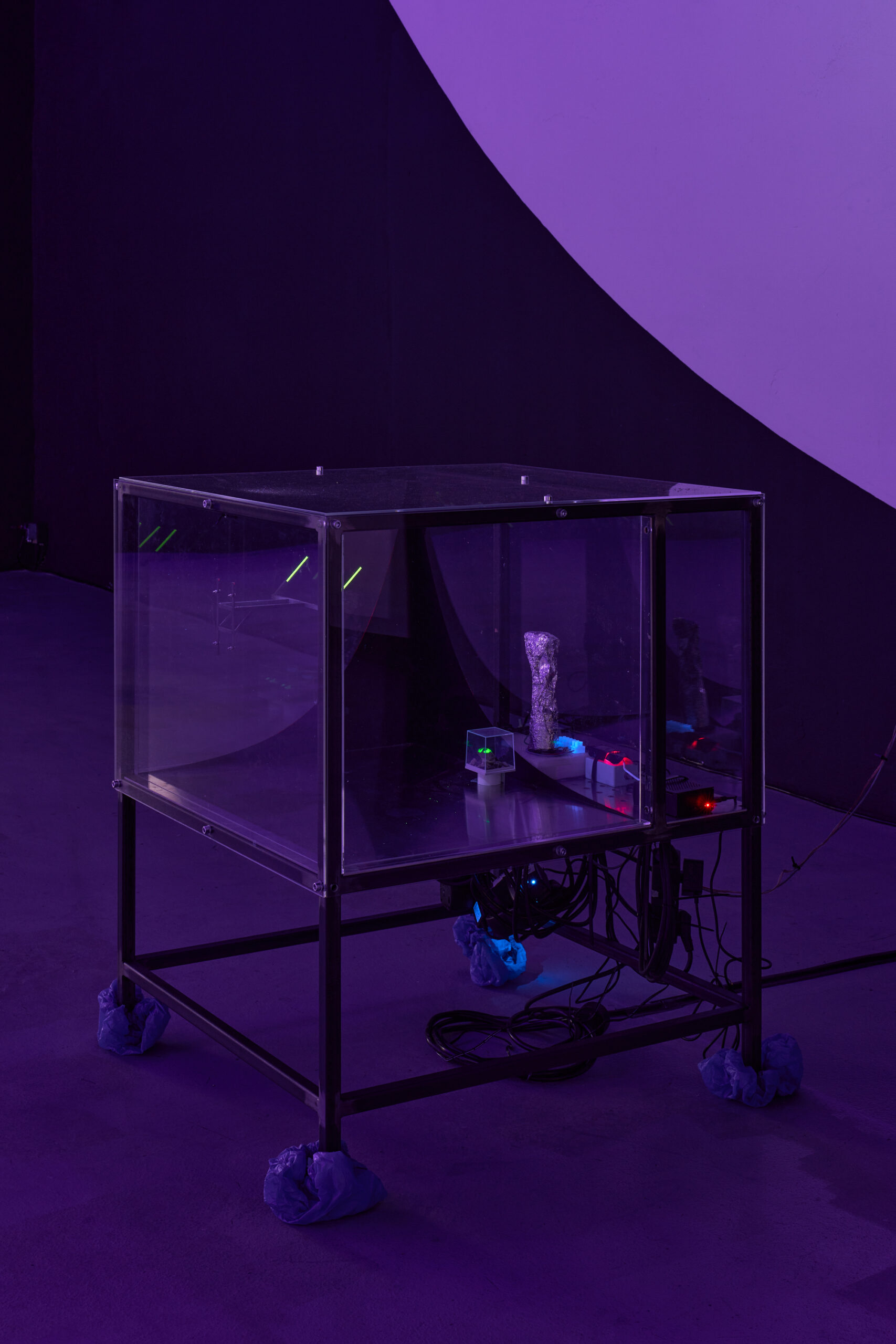
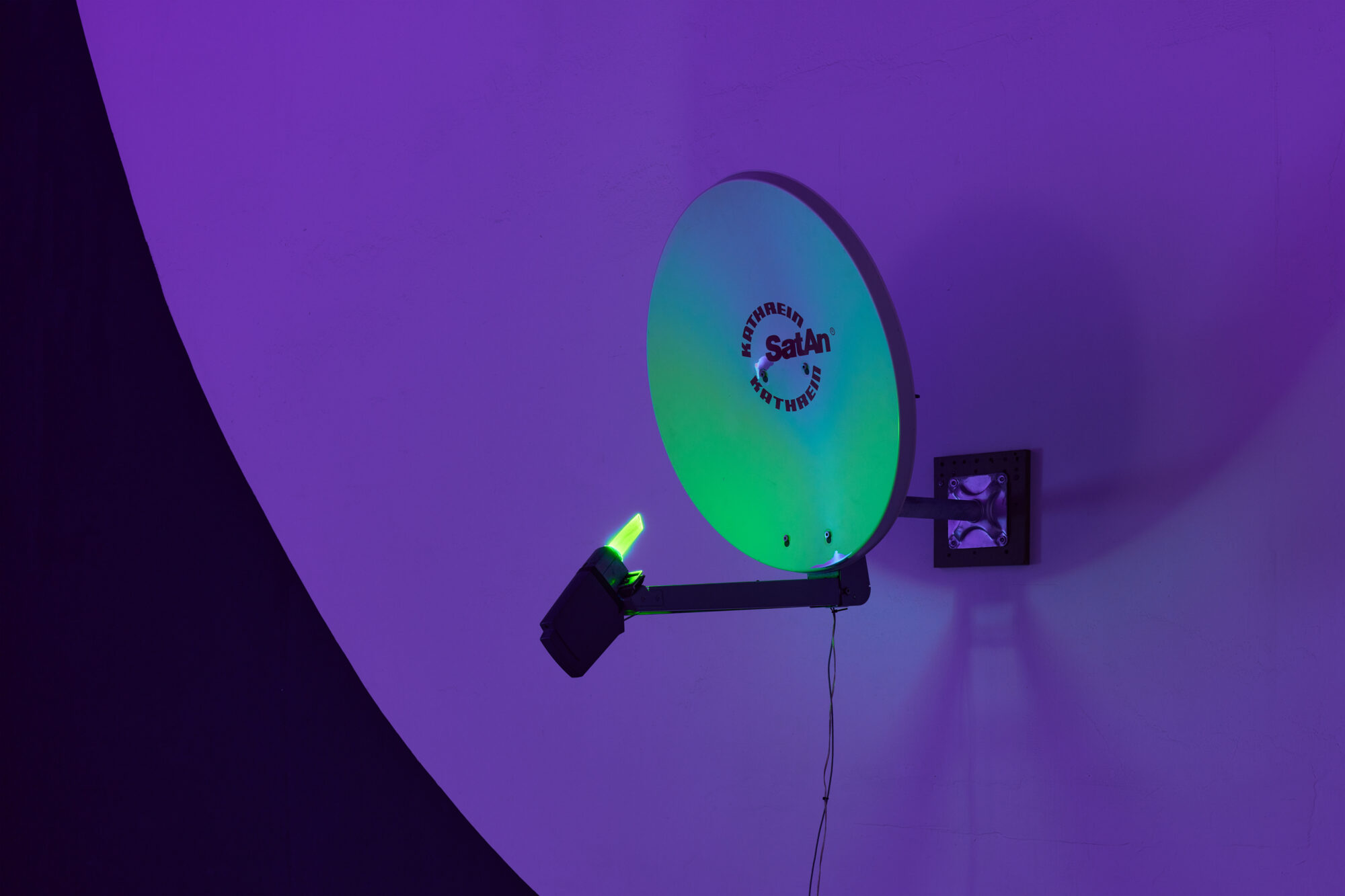
In the box opposite the deflated Lamborghini leather, we find a lump of uranium ore that glows ghostly under the omnipresent UV light. It is part of an acoustic installation that provides a sonic backdrop for the entire space—the doses of radiation emanating from the uranium set the rhythm for a distorted recording of the aforementioned song “Cosmic Girl” by Jamiroquai.
The uranium stone provides an alternative focal point for the entire exhibition: it indicates the power of material itself, deconstructing the symbolic, commodified, and hierarchical logic of the fetishistic prestige of Lamborghini cars and replacing it with the material force of nature as a distinct and indisputable actor. Where only an empty shell remains of the adolescent desires for a Lambo (whose shadow on the wall draws a grinning, silent skull), the uranium speaks as an active agent within the entire situation.
The exhibition is about transcending and processing relationships, whether it be the relationship to one’s younger self or the relationships within the Lőrinc Borsos duo itself. It vividly illustrates a process that looks back at the existence of old ghosts while also offering a springboard for overcoming them, thereby opening a path of escape from unproductive fixations and vicious circles.
This coming to terms with the enduring influence of personal and social spectres is the domain of “hauntology”—a philosophical concept that allows us to examine the tenacious influence of old orders and repressed situations on the present and provides us the means to exorcise them. Such an approach, however, does not work through the hysterical rejection of everything that has preceded in favour of gaming a seemingly illusory “new” beginning, but rather indicates the narrow path toward consciously processing relationships and situations through to their immanent conclusion.
The past cannot be preserved, nor can it simply be erased from our minds. Lőrinc Borsos shows us that we must first exorcise the ghosts of outdated patterns and relationships and provide them the space they need to mutate. Only then can new relationships grow out of their carcass.
Borsos Lőrinc: The Spectre in the Wedge
Kostka Gallery
Curators: Tereza Havelková and Kateřina Pencová
Production: Nikol Hoangová
Graphic Designer: Jakub Kučera
Installation Photos: Jan Kolský
Crytur (lab support + consulting, video recording location)
Eszter Nagy, Csaba Novák (upholstery)
Előd Halász (metal works)
Lamborghini Praha (sound + video recording location)
Péter Márton (sound + electronics)
Vítek Bohal, Zsolt Miklósvölgyi (concept framing, consulting)
@radminerals (geological guidance)
Vít Bohal is currently a PhD candidate at the Center for Critical and Cultural Theory at Charles University, Prague. His dissertation focuses on formulating a ‘comparative xenology’ which analyzes the conception of xeno within an infrastructural analysis of otherness. His work focuses mainly on contemporary feminist theory, accelerationism, speculative realism, post-digitality and philosophy of technology. He is a member of the Prague-based Diffractions Collective and has participated in various curatorial and discursive projects both in Prague and abroad. He has edited a number of essay collections and in 2019 was a visiting researcher at the University of Siena’s Department of Education, Humanities and Intercultural Communication.
Borsos Lőrinc (based in Budapest, Hungary) is a fictional artistic persona developed since 2008 by János Borsos (b. 1979, Székesfehérvár) and Lilla Lőrinc (b. 1980, Mór). Both studied at the Hungarian Academy of Fine Arts. Their practice, grounded in the deconstruction of traditional artistic strategies and in collective and para-institutional approaches, connects the legacy of the Hungarian neo-avant-garde with contemporary media and technological transformations. Gradually moving from early painting to installation, speculative world-building, and alternative pedagogy, they have realized a number of significant projects, including the exhibitions Nonentity (2016, ICA-D, Dunaújváros), For the Child of the Future (2023, Művész Malom, Ferenczy Museum, Szentendre), and Narnia is a Lie (2024, Hessel Museum, USA). They are currently based at Art Quarter Budapest (aqb), where they maintain a studio and actively contribute to the institution’s activities.
Text originally published on Artalk.cz (1 June 2026).
Borsos Lőrinc: The Spectre in the Wedge, Kostka gallery (MeetFactory), Prague, 2026. Image courtesy of the artist and MeetFactory. Photo: Jan Kolský