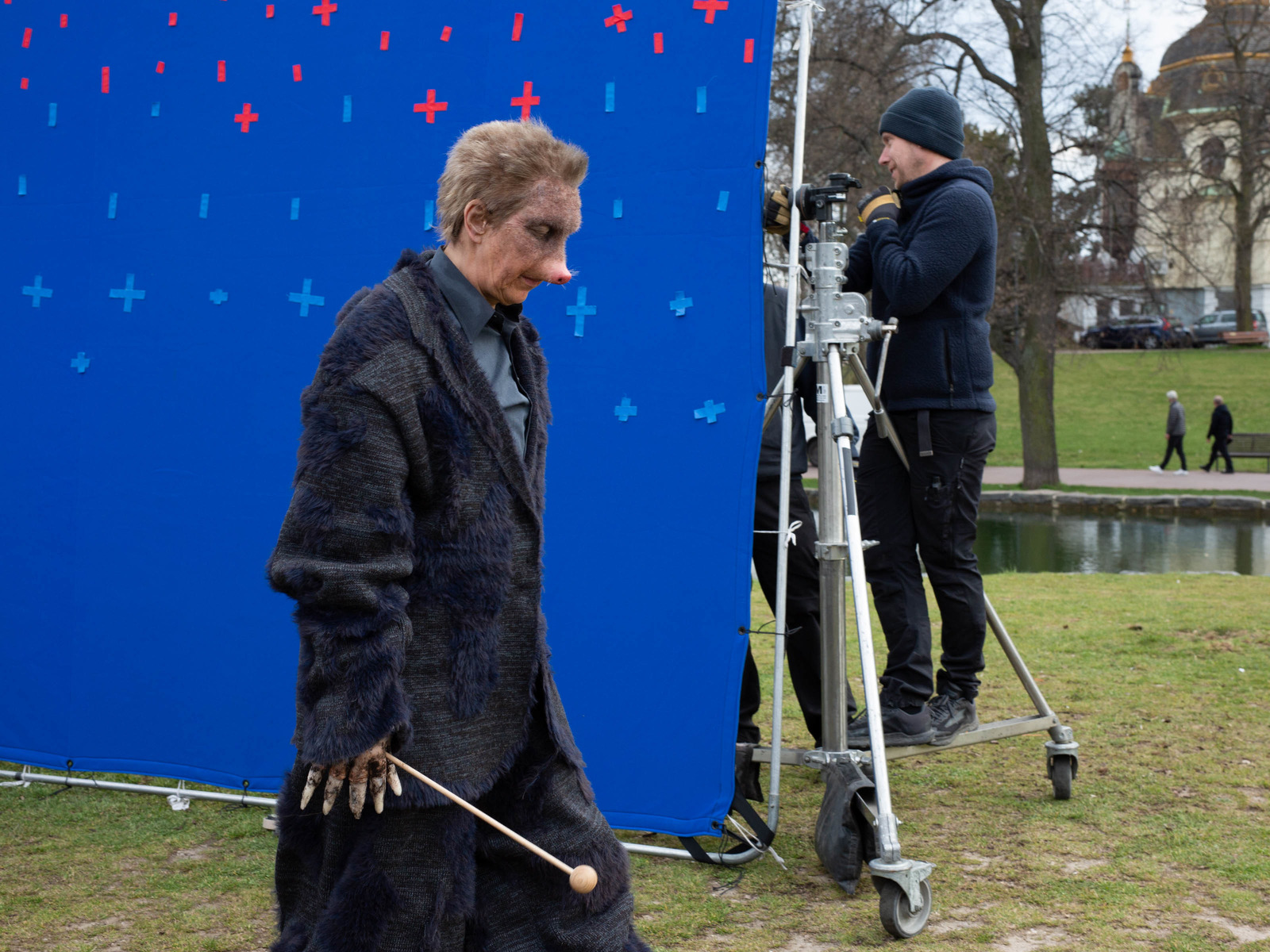
CZECHOSLOVAK PAVILION THE SILENCE OF THE MOLE AND THE POLITICS OF A STOLEN FANTASY
What happens when a childhood hero becomes a vehicle for political power? Miki Škorpil sits with the artists behind The Silence of the Mole, the Czech and Slovak Pavilion at La Biennale, to discuss stolen fantasies, silenced instruments, and the uneasy boundary between shelter and paranoia. Moving between Krteček, Kafka’s burrow, and the politics of cultural representation, they reflect on imagination as a site of vulnerability and a possibility for collective resistance against the surge of far-right politics.
MIKI ŠKORPIL
How did the collaboration between the four of you start? Who “chose” who?
TOMÁŠ KOCKA JUSKO
It all began in March 2025 with an unexpected phone call I got from Jakub while walking the dog. We knew each other from before, I worked with him on the production of his exhibition for GHMP (Prague City Gallery) in 2023. We therefore knew about each other but had never worked together so closely before. A combination of Czech and Slovak artists was also a requirement of this year’s competition, since this year marks the 100th anniversary of our common Pavilion. The phone calls became more common and gradually, we began considering a project. Peter was invited by all of us together, so he joined last but at the same time with a very fateful story.
PETER SIT
I was sitting in Vienna with a friend, and we were discussing the Biennale. He asked me if I plan on applying for the competition, to which I answered that absolutely not. That I like my current tempo and do not want to ruin it (laughs). Then he asked me who I could imagine in our Pavilion. I said Jakub Jansa and Selmeci Kocka Jusko. That they are quite different but that I could imagine them and their art working well together. The next day, Jakub called me, saying that they are sitting together with Alex and Tomáš, considering applying for the Biennale and that they would like me to be a part of it. It seemed unbelievable to me, and I think I immediately said: “Let’s do it.” When we met for the first time, they had several ideas ready. As I saw Krtek among the references, I was ecstatic and knew that this is it. We started working on it together immediately, Kafka and other inspirations joined soon. And then we got the e-mail stating we won the open call. It feels like it was meant to happen.
MIKI ŠKORPIL
When and how was the concept of the Pavilion created? I am asking also taking into consideration the political timeline, with Czech Republic getting a new government in the autumn of 2025. Who came up with Krteček?
ALEX SELMECI
As Tomáš said, the concept was being created in the spring of 2025, shortly after the announcement of the competition for the realisation of the pavilion, at which point we were looking for it together in intense discussions. At that time, Fico’s government was in power in Slovakia again and we all realised that we are entering a complicated context. Actually, we were doubting for a long time whether to even apply with the project, and we didn’t know at that time how the situation in Czechia would develop. Together, we were looking for a topic we would like to talk about and one of the strongest motifs was exactly the growing influence of the far right all around. We decided to relate to it through topics that directly concern us—the misuse of culture and its resources for increasing political power. In the case of Slovakia hand in hand with the destruction of culture’s independence. And so, we came to the image of a stolen fantasy. Jakub, who uses various real and fictitious characters for his narratives, often in the form of building a sort of alter-ego, started looking for a person or being, which could represent both our countries. Then he came with the character of krteček and we came with the non-functional musical instruments.
MIKI ŠKORPIL
Alex and Tomáš, you worked with a lot of the similar themes (safety, rest, silence) and objects (ear, burrow) in the past. How did you adapt them for The Silence of the Mole? Is it a continuation of your previous work? Were you thinking about Kafka’s The Burrow already in your earlier work?
ALEX SELMECI
In the beginning, it was important for us to create a basic frame for the project together, which we could then all approach through methods and media close to us. We did not know The Burrow before and only discovered it during the project. It is funny though, that aside from the fact its main character is also a creature resembling a mole, it’s also full of images we’ve been working with for a long time. The border between inside and outside (interior/exterior), different types of non-space, gaps (the space between walls), den and hiding place, which creates a sense of safety and anxiety, doubt, paranoia. We were working on a different series at the time, which also worked with animal dwellings, but it concerned bird- and bat-houses and the motif of fly-in orifices.
TOMÁŠ KOCKA JUSKO
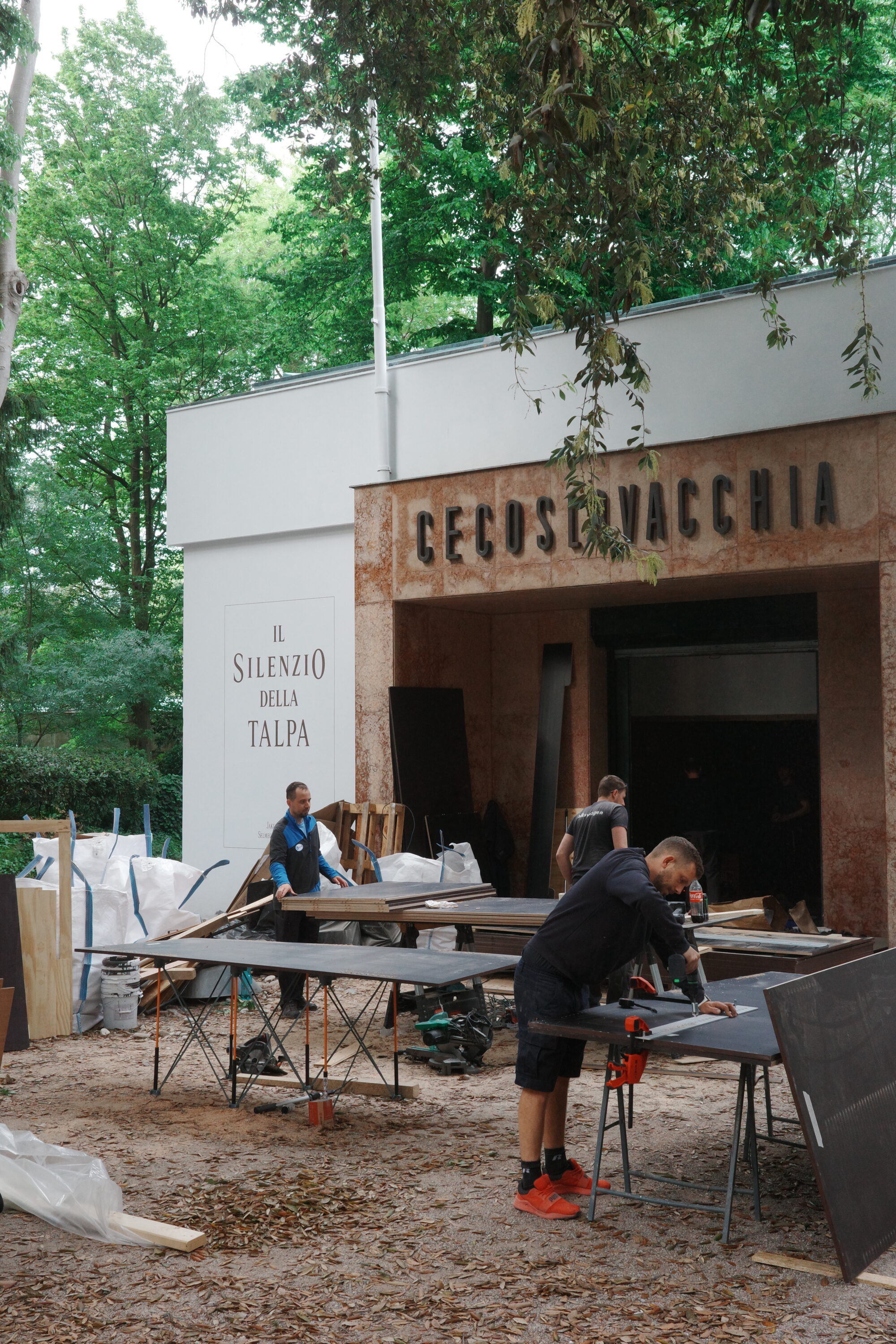
As Alex said, we’ve been working with the theme of a hiding place or a space for rest for a long time. This time, we could apply it to the entire matter of the Pavilion and change its overall structure. We created an entirely new space in the Pavilion, a secondary Pavilion so to speak, which directs movement into narrow tunnels with low ceilings. Aside from the fact that we created specific acoustic and light conditions like this, it also helped us deal with the technical problems of the Pavilion which is still undergoing reconstruction. We built, in essence, a big den, a burrow, which is a reference to both Kafka’s and Zdeněk Miler’s mole. We gave the central part the working title “Sleeping Chamber” and it is precisely there where you can find his “warehouse” of instruments. You can reflect on where the mole moves through and why he left his instruments in this place and in the state they’re in.
MIKI ŠKORPIL
And another question for you both Alex and Tomáš. What role do musical instruments and folklore play in the exhibition? I noted that in your previous work as well, you are often inspired by a past which holds the possibility of a future. Is that the case with the objects and instruments in The Silence of the Mole?
ALEX SELMECI
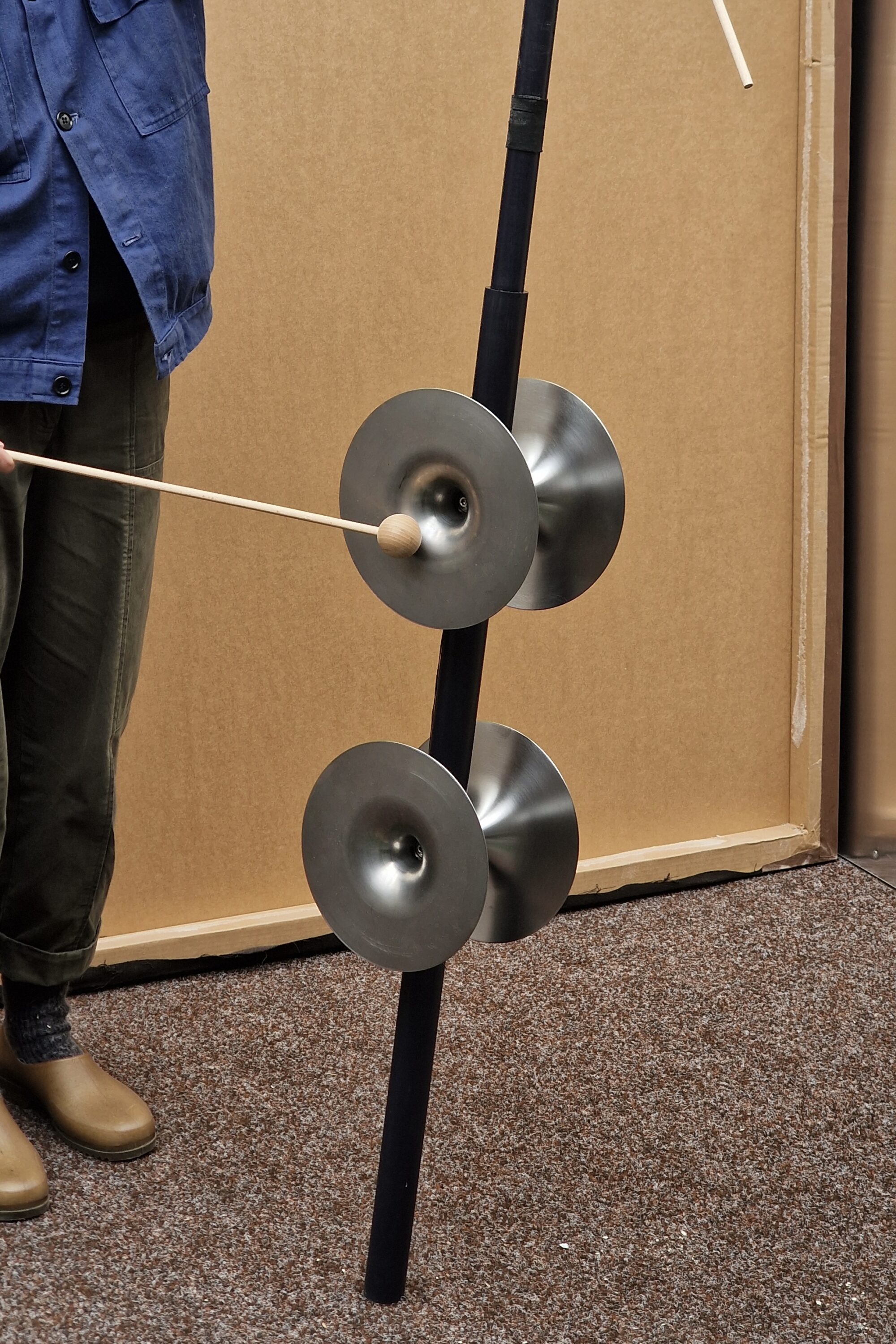
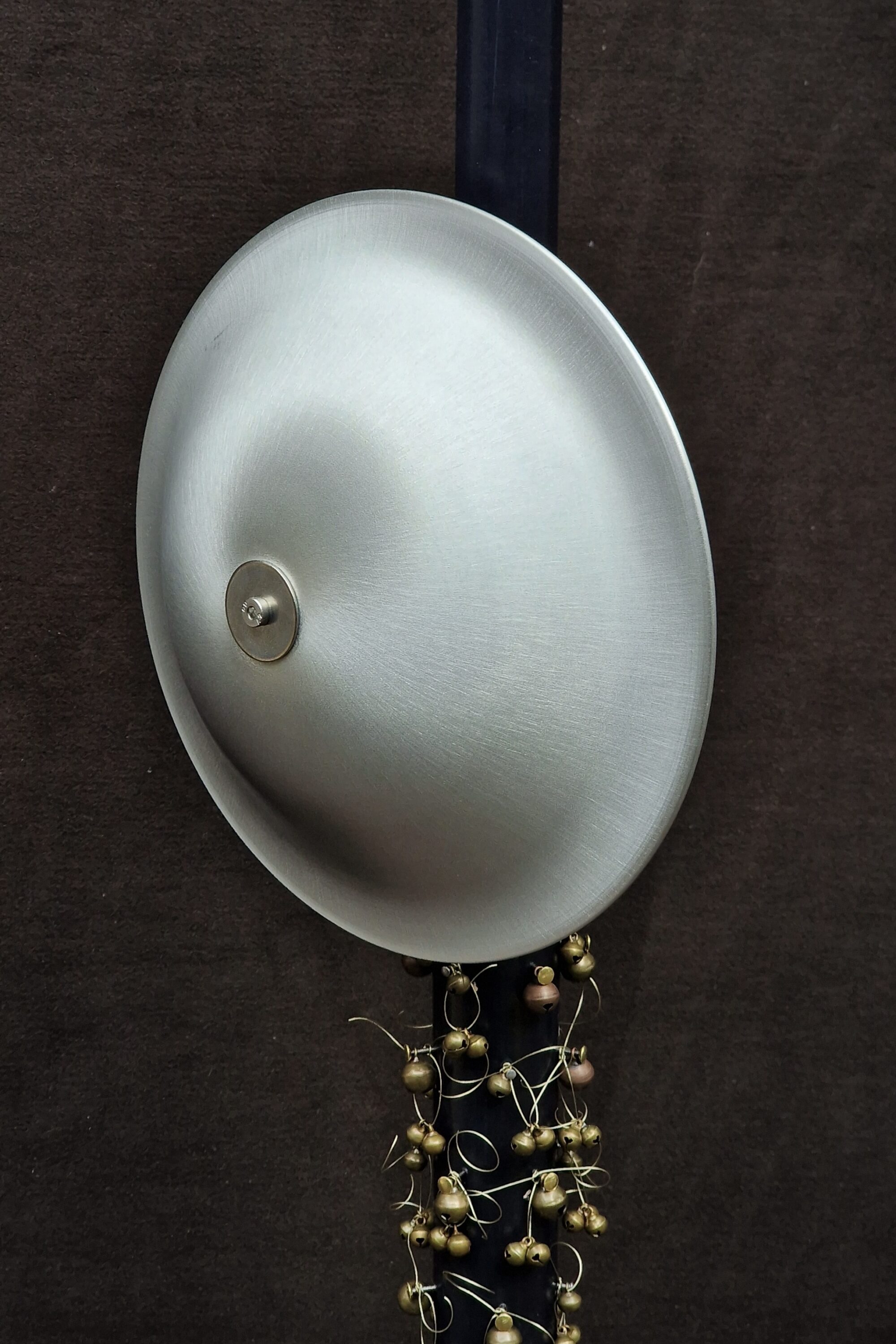
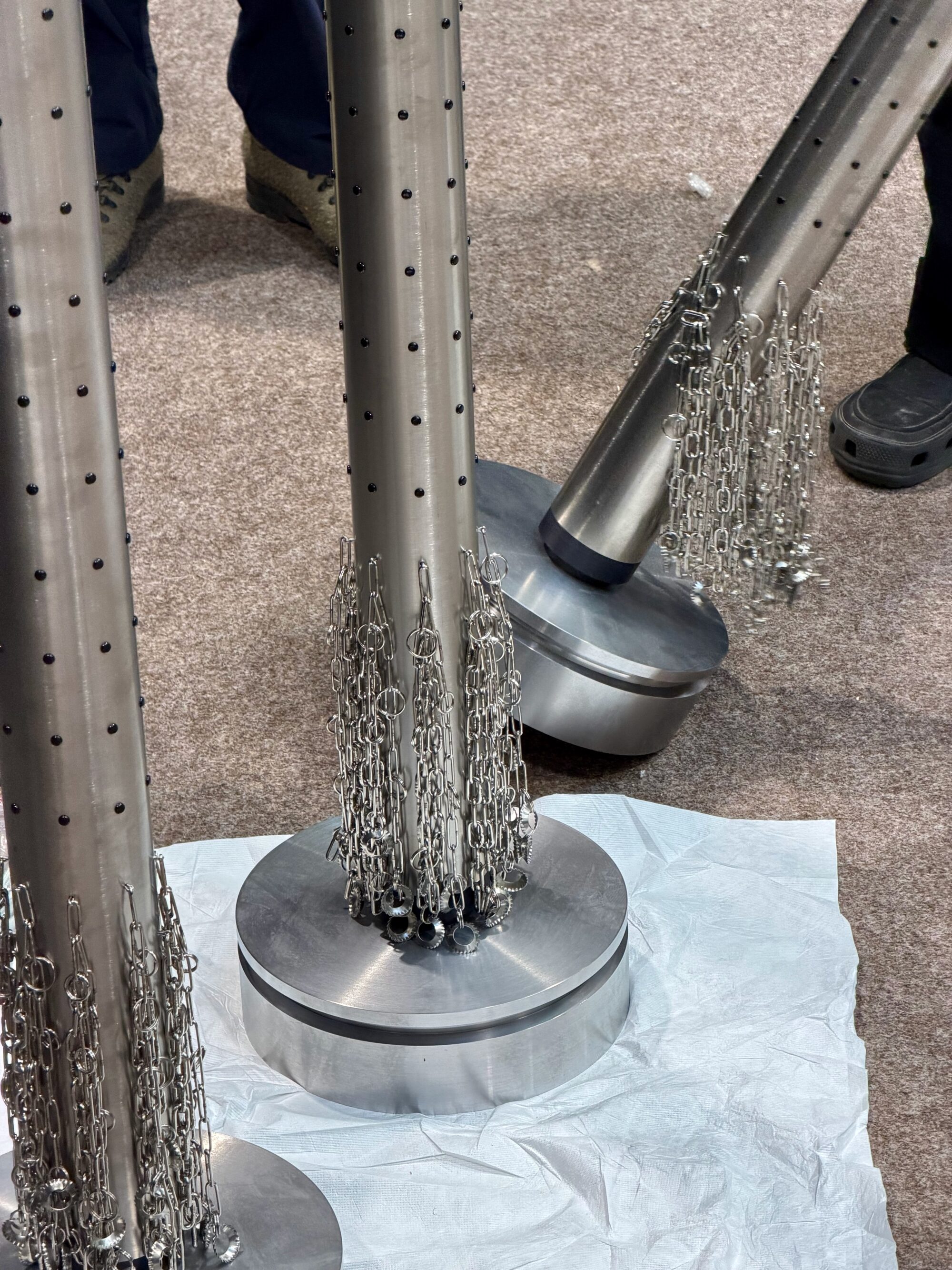
The motif of non-functional or resting instruments and objects has been recurring in our work for some time, be it historical, contemporary or sometimes fictional. The silent instruments in the exhibition refer to imagination and playfulness under attack, or rather to fantasy taken hostage by the mechanisms of soft power. We also work with their multiplication, and a sort of interrupted synchronisation, with which we want to address an inability to be heard, not only on an individual level but also collectively.
TOMÁŠ KOCKA JUSKO
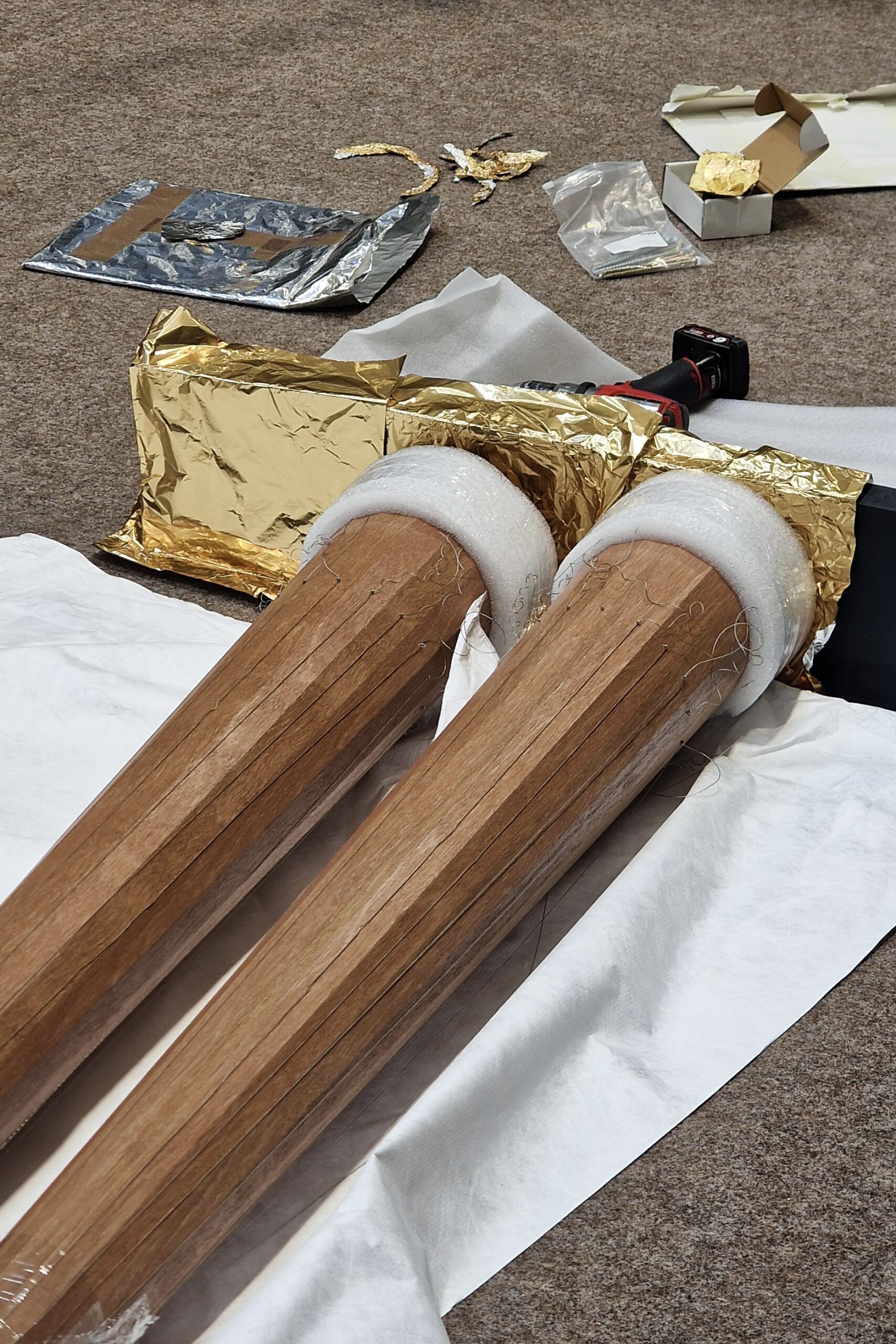
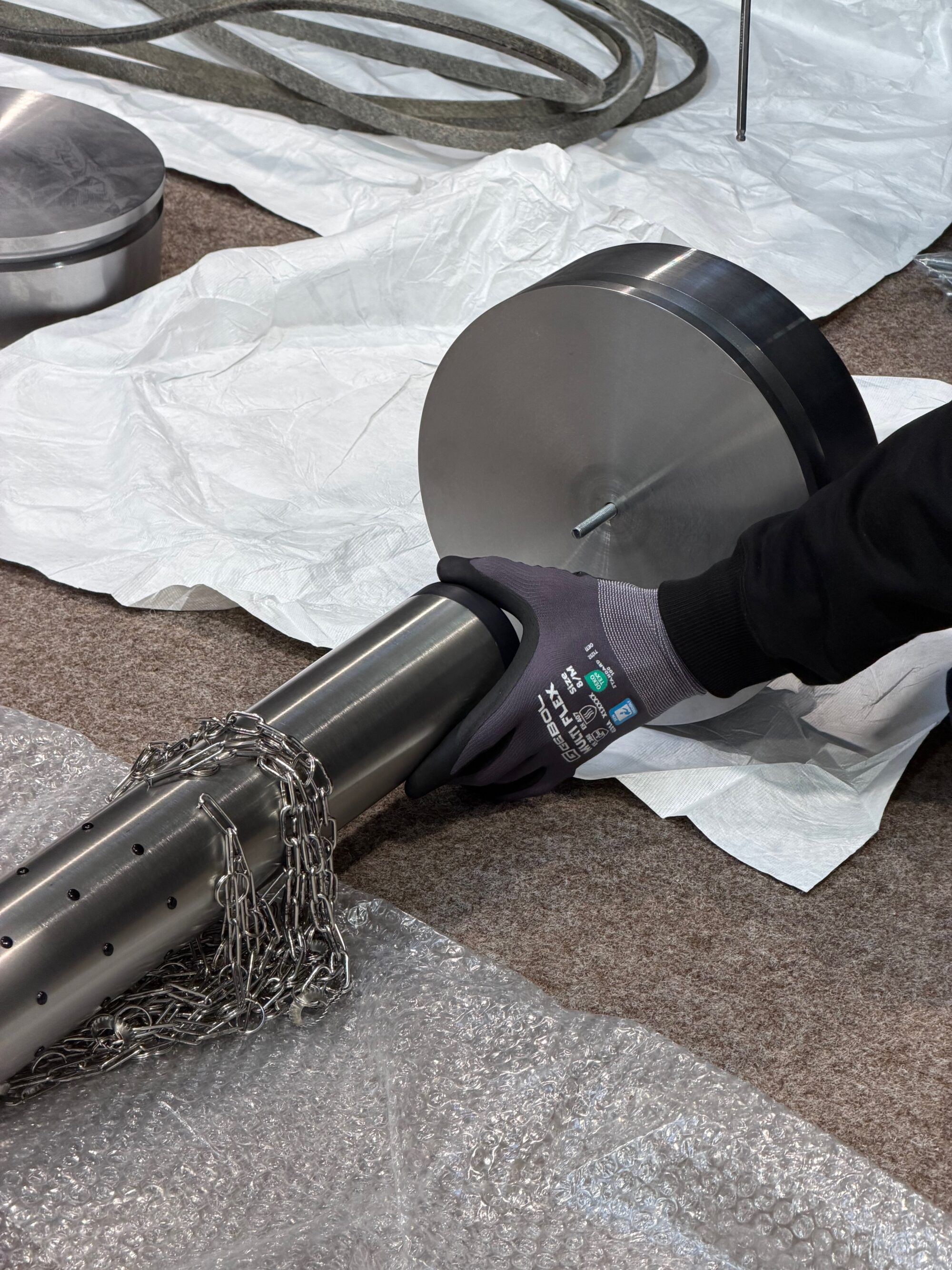
It is important for us to have a reference point. We like to move on the border between real and fictional objects. And in this case, it seemed nice to address the local context and to link to the folk nature of the main character. The instrument that Mr. M got in the film in the end was an ozembuch. It is a folk instrument typical for the region of Czechia and Slovakia but with equivalents in other neighbouring countries. It is part of the group of idiophonic bar instruments, the same as rattles, where we also found an instrument called bunkoš. We also chose it thanks to its construction, which is not too sophisticated, it does not require professional skill and does not have clearly defined rules of construction or play. Ozembuch is a rod, which can be fitted with practically anything that can emit sound. It adds variety to the performance and range of play, from rhythmical seriousness to playful simplicity. We were also interested in the theme of hitting the instrument against the ground, a type of resistance created by the player.
ALEX SELMECI
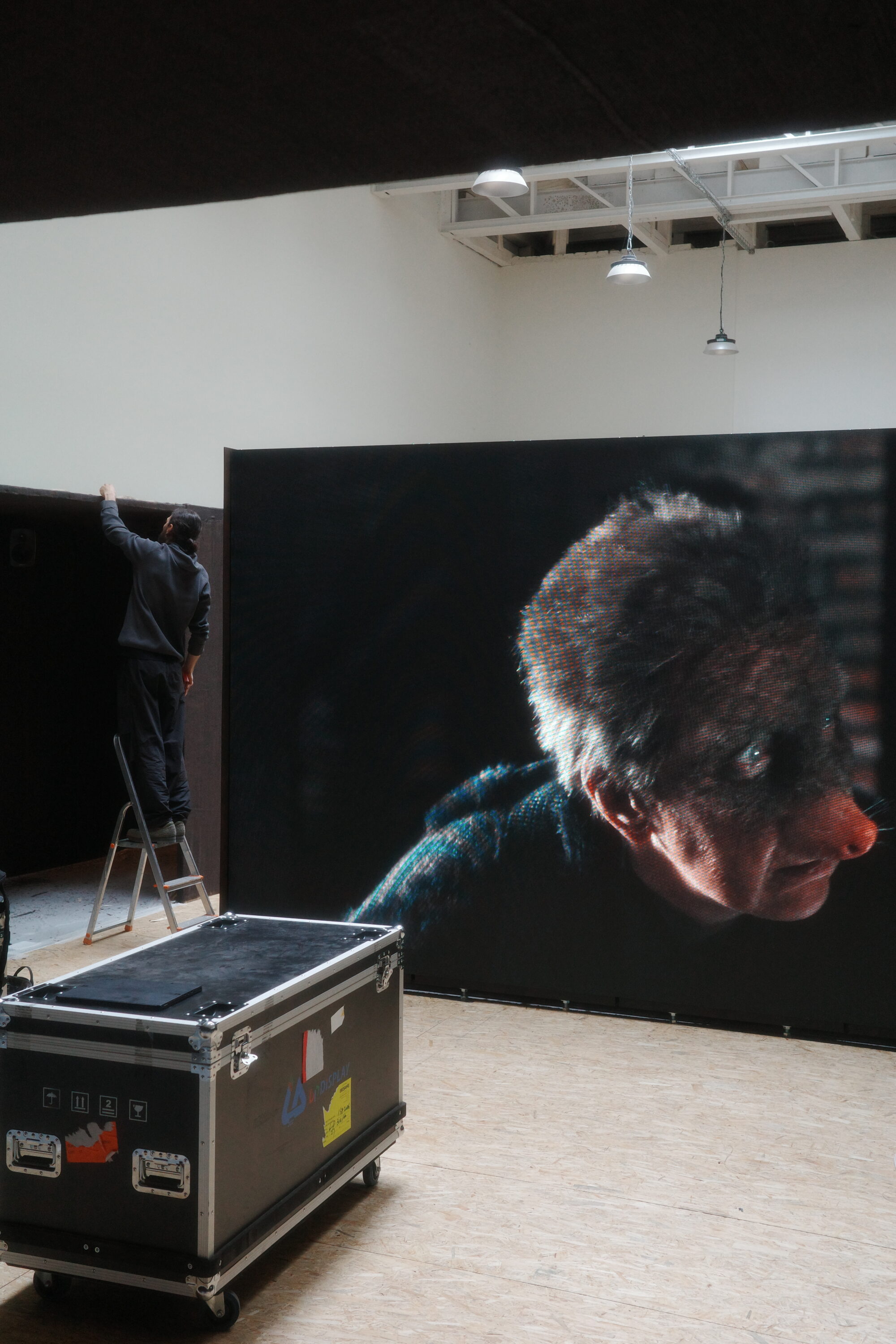
Subsequently, we were thinking how to best express that they are not functioning or put to the side, and we experimented with different suggestions, details, and installation forms to achieve this. We rid individual elements of the instruments or resonance or we fit the body with various components so densely, that there was no space left to grab the instrument and use it. The most prominent principle was probably a sort of burdening, “glueing” to the ground, which makes the instrument difficult or impossible to play. This influenced the performative part of the movie in the end as well, where Mr. M completely loses control of the instruments in the last scene. For the film, we created a connected series of objects in collaboration with Jakub, which is more closely related to the original musical instruments. While we defined the overall shape and aesthetic persona, Jakub contributed with a series of sculpted animal figures—a frog, a hedgehog, and a hare, who are in the end the only beings in the film communicating with Mr. M directly.
MIKI ŠKORPIL
In a previous interview accompanying your exhibition in MeetFactory in Prague, The Light of One Lamp Only, Alex and Tomáš, you said that it is not yet scenography because there is not enough plot. In The Silence of the Mole however, Jakub’s film could be seen as the plot. Did you therefore approach work on The Silence of the Mole as scenography?
TOMÁŠ KOCKA JUSKO
Yes, in this case we can definitely talk more about scenography. Not only because Jakub’s movie gives the project a narrative, but it’s also about the degree to which we work with the material or the way we think about placing objects into space. We do not work by imitating surfaces and spaces but rather by indirectly suggesting the surroundings. Suggesting an underground tunnel using dark paint with jute or the transition into Krtek’s main room using a carpet on the floor. You could look at it as a scenographic solution, but each material and surface also bring their own context. While preparing the project, we felt some pressure to win and keep the attention of the viewer, everybody was telling us how the economy of attention is evident during the Biennale. We had an urge and external pressure, to create something bigger, more striking, more engaging. However, our long-term approach is to work with a type of inconspicuousness, maybe even emptiness, which still contains the expectation of action or movement. The instruments and architecture kept their low-key expression and mass and the exhibition relies only on daylight, which is variable. It is therefore possible that you won’t see the exhibition fully at certain times but that is okay because you are in a den after all.
MIKI ŠKORPIL
I cannot help but think of this notion of cancelled futures. Do you see some connection here as well? Can we see Krteček as a type of cancelled future, Jakub? As a way of co-existing and as joy from imagination which was lost and, maybe now, found again? I think of it also in connection to Czechoslovakia as a “cancelled project”…
JAKUB JANSA
I have the feeling that over the past 15 years, during which I’ve been working consciously as an artist, the themes of cancelled future, dystopia, collapse, the end of civilisation are constantly being mentioned. I cannot say anymore if I am imprisoned in some algorithmic micro-trend, or if the gloom is generated by the local circumstances of artistic work or if we are really on the brink. But rather than being about the end of the world, the project talks about a fantasy which is purposefully used for propagation or service. I think that the ending of the film shows, in a poetic and abstract way, that falling silent leads to destruction. Maybe being louder can build a new common future again.
MIKI ŠKORPIL
In your practice, Jakub, you often work with your own characters, most prominently in your series Club of Opportunities. How was your approach different now that you were working with an established character, such as Krteček? To what extent were you influenced by him when creating Mr. M?
JAKUB JANSA
With the Club of Opportunities, I was interested in developing the character of “Celerista” (celery man)—a hybrid of a man and the root vegetable celery. I was interested in finding out who the character is and where he is headed. Everything was being created gradually and without a set goal. Celerista was an empty vessel, looking for its identity. I was glad that the work was not built on a character or story taken from pop culture that everyone can immediately identify. It was different with Krtek and I must admit that I was struggling with it ever since Krtek first came into question. I understood that it was a form of culturally referential doping. At the same time, I was aware that work on a Biennale project has to be more straightforward and offer a more accessible format, so I also accepted Krtek as an underground hero with the potential to communicate on the surface as well.
MIKI ŠKORPIL
Could you then enlighten the connection between Krtek and (far-right) political influence, alternatively the use of imagination as “soft power”? In connection with Krtek, I immediately think of the (mis)use by Miloš Zeman during his visit to China in 2014. Were you inspired by a specific example from politics?
JAKUB JANSA
Krtek is not a symbol of the far right. It’s an innocent, well-known character which easily becomes a tool of cultural representation, precisely because of its innocence. For the populist far right, it is attractive as a popularised, almost folk character, which evokes something that’s “ours,” closely known and culturally safe. The tension arises in the moment where this character is sent to represent a country at one of the most important displays of contemporary art. Not to say something but to represent. Therein lies the paradox. At a time when populist politics weakens institutions of contemporary art in many places and replaces them with national symbols, folklore, or traditional crafts, Krtek enters the space of high art as a seemingly ideal representative. He becomes a Trojan horse. During the preparations and the performance itself, his role changes and a safe mascot becomes a character with a politically critical story.
MIKI ŠKORPIL
Peter, prior to this collaboration, you worked a lot with themes around ecology, the Anthropocene, the Pyrocene, etc. How did this previous experience and general interest play a role in The Silence of the Mole? Did you have to opt for a different approach, also taking into account the circumstances of it being the Venice Biennale and you representing your countries?
PETER SIT
Those are, of course, topics that interest me, because the politics of ecology influences our lives. With The Silence of the Mole, however, we tried to limit the content, so that it would not try to say everything. On some level they can definitely be present. But we wanted the critique of political representation and the misuse of representation by political power to take centre stage.
MIKI ŠKORPIL
I would like to return to Kafka’s short story The Burrow. How much did it inspire you when creating the pavilion? I have personally never thought of Kafka as a political writer. Do you read political currents in the short story itself or was it you who gave it a political charge?
PETER SIT
For me, two sources of inspiration are equally important: Krtek and his work with narration and content, and Kafka’s The Burrow, in creating a feeling in the readers, in this case viewers. If I were to simplify it, Krtek was more the inspiration behind Jakub’s film and Kafka inspired the objects and architecture of Alex and Tomáš. They complement each other and create one whole. You can read Kafka’s The Burrow politically as well. Also in academic literature, there is an entire current, which reads later Kafka through the lens of politics. In The Burrow, there are several layers: obsession with safety, its main character spends its whole life building a perfectly secure space and the more it perfects it, the more paranoid it becomes. That is a very current metaphor: a society, which absolutely prioritises security, can in the end create its own fear. There is also an invisible enemy, a sound the character hears underground, and which most likely does not even exist. Some authors interpret the burrow as a model of a modern state and private property where the border between protection and violence gradually dilutes. Another important inspiration for me was Marx’s motif of an “old mole,” a metaphor of history and revolutionary potential, which silently works underground and interferes in society only when nobody expects it.
These are all important layers of the project for me. At the same time, the feeling created by Kafka’s short story is the most crucial for me. And Alex and Tomáš work long-term specifically with creating a similar atmosphere in their works, but also when creating exhibitions.
ALEX SELMECI
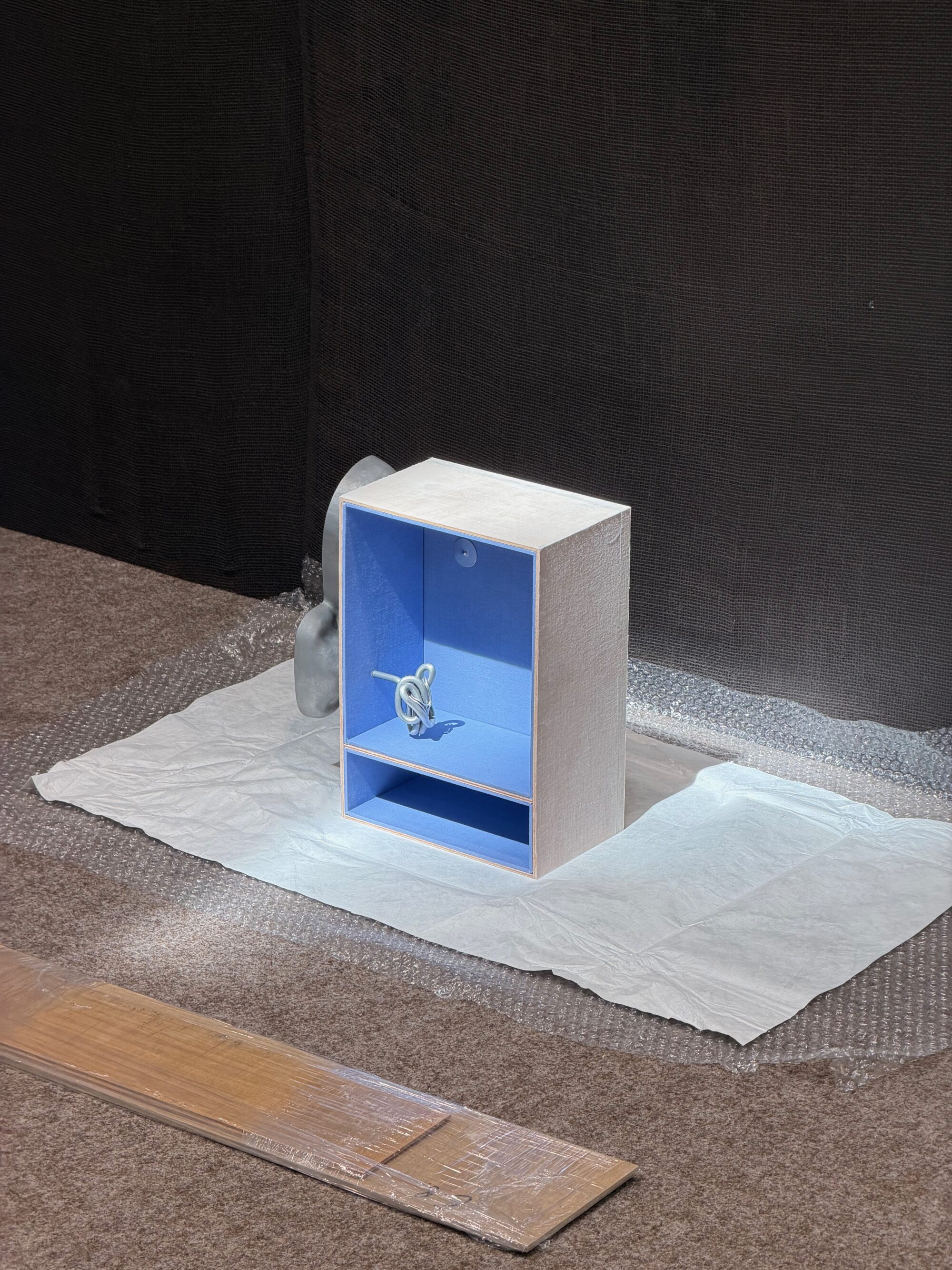
I know Kafka as a critic of bureaucracy and the invisibility of power, which is ever present but intangible. The Burrow made its way into the intro text of the exhibition and into its architecture. The object labelled The Ear of the Householder is something between a model of the inner ear, a portrait, and a miniature of the whole space. It refers to a part of the story, in which the mole, or the householder, tries to track down a silent unknown noise. So, the source of invisible power becomes an unrelenting noise and the inability to find its source. Aaron Schuster also writes that in The Burrow, Kafka created “what is no doubt the greatest noise complaint in the history of literature.”*
When installing the objects, we were thinking of the mole’s movement inside the space. Kafka’s mole constantly moves around his space, often paranoically transporting his supplies and always contemplating re-building his corridors and castle courtyard. He also uses various liminal spaces and temporary shelter. We were working with the rhythm of concentration in the exhibition—by which I mean a certain grouping of objects—but also with emptiness, or dead space. We wanted our objects to seem more like laid aside than installed. We were imagining something like an office, which is almost moved out of already, and the last remains of equipment are left along the walls.
* “Kafka, who was an enormously talented and prolific complainer, has composed with The Burrow what is no doubt the greatest noise complaint in the history of literature.” From Aaron Schuster’s essay “Investigations of a Mole: Kafka, Philosophy, Psychoanalysis,” published in the Pavilion’s catalogue. Schuster is also the author of How to Research Like a Dog: Kafka’s New Science (MIT Press, 2024).
The Czech and Slovak Pavilion in Venice is a unique heritage of a shared state, which currently functions on the principle of regular rotation of management and curatorial direction between Slovakia and the Czech Republic. Both countries take turns hosting exhibitions, with the main organizers being the Slovak National Gallery (SNG) and the National Gallery Prague (NGP). The selection of the project takes place through an open call announced by the responsible gallery. In 2026, the Czech and Slovak Pavilion at the Venice Biennale marks the centenary of its opening, which was one of the reasons the competition brief called for an artistic project for a joint presentation by both countries. Thus, after twenty years, both nations agreed to realize a joint exhibition presentation at this year’s Art Biennale in Venice.
Jakub Jansa is an artist with a distinctive approach to combining film, installation, and performance. Through a nuanced and reflective sensibility, his work raises questions about the mechanisms of social structures and the ideologies shaping them. His exhibition series with the umbrella title Club of Opportunities reflects dynamics of class issues and power hierarchies in a way that is poetic yet intellectually provocative. Work blends fiction, humor, and elements of the grotesque with contemporary leftist theories. He creates imaginative environments that expose the fragile and illusory nature of social systems we live in. In 2021 was awarded the Jindřich Chalupecký Award. His work Shame to Pride is part of the new permanent exhibition at the National Gallery Prague. In 2022 he created a new comprehensive work for the exhibition Flower Union, which was organized by the National Gallery Prague on the occasion of the Czech Presidency of the Council of the European Union. The latest, ninth episode of Club of Opportunities was commissioned for the 57th Steirischer Herbst (2024) at the Neue Galerie Graz. In 2023 had an extensive solo exhibition at the Stone Bell House of the Prague City Gallery. He has also presented his work at Pioneer Works (2018) and Anthology Film Archives (2023) in New York, the 34th Ljubljana Biennale of Graphic Arts (2021), HEK in Basel (2020), and the 6th Athens Biennale (2018).
Selmeci Kocka Jusko are an artistic duo of Alex Selmeci and Tomáš Kocka Jusko , who create complex intermedia installations or, in contrast, present collections of physical objects that function as “energy tabs.” Disrupting traditional exhibition formats, they explore the fluidity of interpretation through layered visual and spatial structures, examining the relationship between visual representation, memory, and perception. Experimenting with systems of measurement, they use intuitive methods to question how time, scale, and quantity can be embodied within material form. Their work also engages with the relationship between labor, exhaustion, and imagination, treating artistic practice not only as a form of production but also as resistance and a modest utopian gesture of empathy and attention. Their recent projects include a permanent public space installation Spool in Bratislava (with Natália Sýkorová, 2024), solo exhibitions at Hunt Kastner (2025), MeetFactory (2024) and Galerie NoD (2023) in Prague, at VUNU (2025, 2022) and Šopa Gallery (2025) in Košice. They have also presented their work at PLATO in Ostrava, Kunstverein Gastgarten in Hamburg, Longtermhandstand Hall in Budapest, The 34th Biennale of Graphic Arts in Ljubljana, FUTURA in Prague and Print Gallery in Tokyo.
Peter Sit is an artist and curator. He currently works as art director at e-flux journal. From 2012 to 2022 he was co-founder and member of the collective and platform APART, with which he realized a wide range of exhibitions, publications, and discursive projects. Together with APART he exhibited at institutions such as Kunsthalle Bratislava, Karlín Studios in Prague, Easttopics in Budapest, Biennial of Graphic Design in Brno, CCA Chronicle in Bytom, MoMA in New York, and Glassbox in Paris, Alserkal Arts Foundation in Dubai, the City Gallery Prague, Kunsthalle TRAFO in Szczecin. Sit has participated in international residencies including the Salzburg Summer Academy and Art in General, New York. His editorial and curatorial practice spans books, exhibitions, and public programs, including Harun Farocki: Shaping of Our Present (A Promise of Kneropy, 2022), Life, Death, Love and Justice with Didem Yazici (Yapı Kredi Culture Centre, Istanbul, 2022), and the 9th Futurological Congress: Future of Language with Julieta Aranda (Slovak Radio Building, Bratislava, 2019). He has organized and contributed to numerous lectures and discussions on conceptual art in relation to art education and mental health. He is currently working on a research and writing project Art in Times of Anxieties and Depressions.
Jakub Jansa, Selmeci Kocka Jusko, The Silence of the Mole, various bts, 61st Venice Biennale, Czech-Slovak Pavilion, 2026, photo: Jan Brož, Jakub Jansa, Shotbyus, Barbora Bydžovská, Ⓒ all rights reserved